Top 10 Blending Valve Manufacturers for Global Buyers

Blending Valve selection affects more than outlet temperature. It influences flow stability, energy use, maintenance intervals, and user safety. For global buyers, the challenge is comparing products built for different pressures, media, control methods, and installation conditions. A valve that performs well in a clean test loop may behave differently when mineral scale builds around its seat. Small details matter.

Grand View Research’s Industrial Valves Market report estimated the broader market at USD 78.4 billion in 2023, with continued growth projected through 2030. That figure covers industrial valves generally, not blending valves alone, so it should not be mistaken for this niche’s market size. Hydronic heating educator Dan Holohan has expressed a useful system principle: “A circulator doesn’t pump water; it creates a pressure differential.” Buyers should consider that system context when assessing a Blending Valve’s flow range and response, rather than comparing catalog specifications in isolation. Verify test conditions. Check the materials. Ask how suppliers document temperature control, service access, and performance over time.

This guide introduces ten manufacturers for global buyers to investigate. It focuses on product scope, technical support, quality documentation, and suitability for common applications. Manufacturer claims still require careful review. Data sheets can omit the very operating conditions that determine real-world performance. A shortlist is a starting point, not an endorsement.
Top 10 Blending Valve Manufacturers for Global Buyers

Blending Valves: 2-Inlet/1-Outlet Design and Thermostatic Control Basics

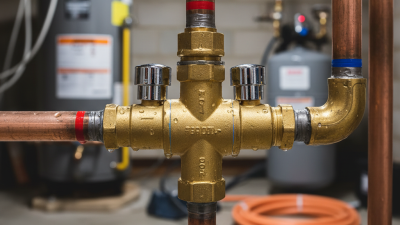
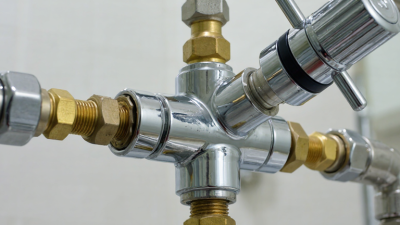
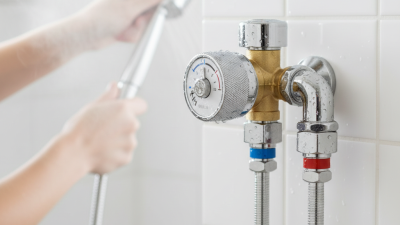
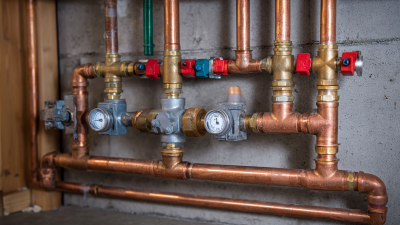
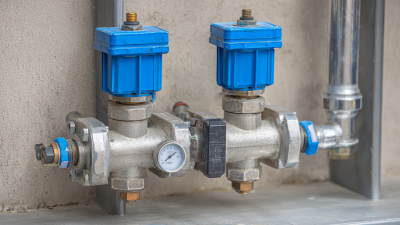
A blending valve combines two inlet streams into one controlled outlet. In a common 2-inlet/1-outlet arrangement, hot and cold water enter separate ports, then mix inside the valve body. A thermostatic element senses outlet temperature and adjusts the flow balance as supply conditions change. Simple in principle. Not foolproof.

For example, a shower valve may receive hot water at 60°C and cold water at 10°C, yet deliver a safer, steadier mixed flow. Performance depends on adequate pressure, correct port connections, and a temperature setting suited to the application.

WHO’s Burns fact sheet reports nearly 180,000 burn-related deaths worldwide each year; this figure covers burns broadly, not plumbing scalds alone. It underscores why temperature control deserves careful attention. For technical selection, buyers can consult standards such as ASSE 1017 for thermostatic mixing valves in hot-water distribution systems, while checking local project requirements.

Real systems are rarely tidy. A partly blocked strainer, fluctuating inlet pressure, or incorrectly adjusted limit stop can affect outlet temperature. Specify the required flow rate and temperature range, then check the valve’s stated operating conditions. Installation and commissioning matter. A useful question is often overlooked: will the valve still perform as intended during maintenance or supply interruptions? Cite manufacturer-independent test records where available, and verify the actual outlet temperature on site.
Industry Standards: ASSE 1017, ASSE 1016, ASSE 1070, and EN 1111

For global buyers comparing blending valve manufacturers, standards reveal where a valve is intended to work. ASSE 1017 covers thermostatic mixing valves used in hot-water distribution systems. These valves typically control water temperature before it reaches several outlets. ASSE 1016 addresses automatic compensating valves for individual showers, where sudden pressure changes can affect outlet temperature. Different jobs. Different tests.

ASSE 1070 covers water-temperature limiting devices, often installed near an outlet to reduce scald risk. EN 1111 sets requirements for thermostatic mixing valves used in high-pressure systems. These standards are not interchangeable, even when product descriptions sound similar. A useful purchasing check is to match the standard to the plumbing layout, then confirm the exact model’s current certification and installation instructions. Ask for test documentation, not just a broad claim of compliance. Details matter.

Real installations can be less tidy than drawings suggest. Long pipe runs, fluctuating supply temperatures, and maintenance access all affect performance. A certified valve still needs correct sizing and commissioning. I would not treat a standards list as a complete buying decision; it is a starting point, and sometimes the paperwork leaves practical questions unanswered. Compare service intervals, replacement parts, and temperature-setting procedures before choosing a supplier.

Top 10 Blending Valve Manufacturers: Product Ranges, Markets, and Specialties

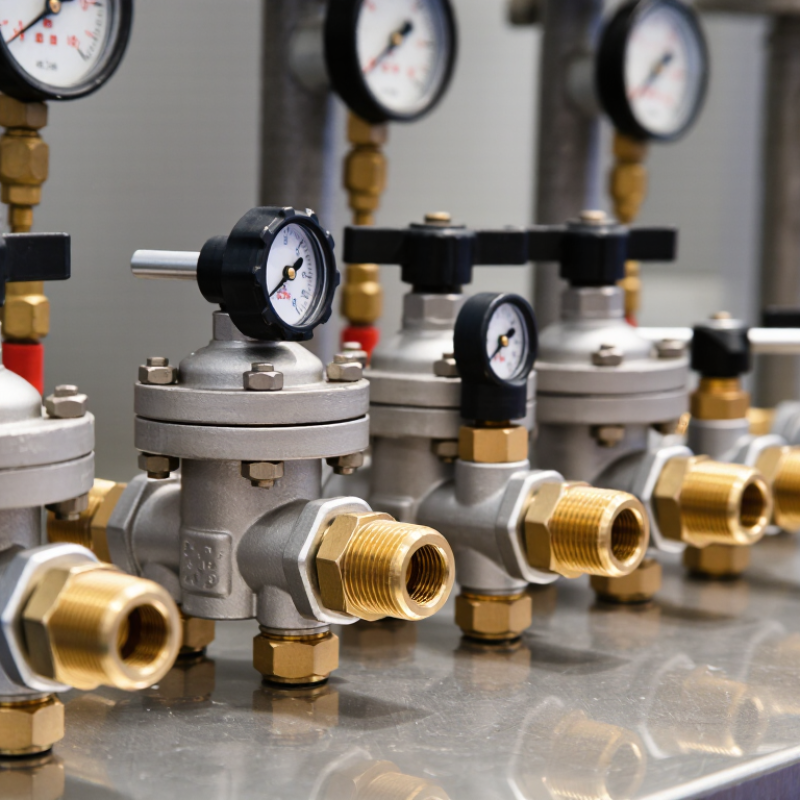
A useful review of ten blending-valve manufacturers should compare product ranges, not just headline flow rates. Typical portfolios include thermostatic mixing valves, motorized three-way valves, and compact assemblies for domestic hot water. Industrial suppliers may add high-temperature trim, corrosion-resistant alloys, and precision control options for process lines. Their markets often span building services, food production, district heating, and water treatment. The details matter: a valve serving a hotel recirculation loop faces different temperature swings and maintenance demands from one on a factory skid. Small distinctions count.

The wider market helps explain this range. Grand View Research valued the global industrial valves market at USD 78.4 billion in 2023; its report groups products across several valve types and end-use sectors. That figure covers more than blending valves, so it is context, not a direct measure of their sales. When comparing suppliers, buyers should check temperature limits, pressure ratings, connection sizes, actuator compatibility, and documented test methods. Ask how the valve behaves during low flow, too. Catalogue data rarely shows every installation issue. A supplier with strong building-services coverage may offer standard thermostatic models, while process-focused makers may specialize in automated mixing and tougher materials. The comparison is rarely tidy. Repeatedly, the best fit depends on the fluid, operating cycle, and service access—not the longest product list.

Top 10 Blending Valve Manufacturers: Product Ranges, Markets, and Specialties

Typical blending valve configurations used across key application markets

The bars count common configuration families associated with each application: thermostatic, pressure-balanced, manual three-way, and motorized three-way valves. This is a technical application mapping, not manufacturer market-share or sales data; suitability varies by system design.

Compare Key Specs: Flow Rate, Temperature Range, Pressure, and Response Time

When comparing blending valves, treat flow rate as a tested operating value, not just a headline maximum. Check the pressure differential used for the rating and compare it with your system’s conditions. A valve rated for 20 liters per minute may deliver less when pipework, filters, or fittings restrict flow. Match the expected demand, including short periods of peak use. Temperature range also needs context: confirm both the fluid temperature and the ambient conditions the valve can tolerate. Small detail, big consequence.

Pressure ratings should cover normal operation and realistic fluctuations, while staying within the limits of connected pipes and equipment. For response time, ask how quickly the outlet temperature stabilizes after a defined change in inlet temperature or flow. Test conditions matter; figures measured under different conditions are hard to compare. Ask for test data, tolerances, and details about sensing or control components. A bench test using your intended flow and temperature range can reveal behavior that a specification sheet misses. It may not predict every installation, but it is a useful check. Some product data remains incomplete, so record what is assumed before comparing options.

Top 10 Blending Valve Manufacturers for Global Buyers - Compare Key Specs: Flow Rate, Temperature Range, Pressure, and Response Time

Comparison note: The rows below describe common blending-valve product categories, not ranked manufacturers or brand-specific products. Figures are indicative market ranges; confirm exact limits and test conditions with the product datasheet.

Blending Valve Category Typical Flow Rate Typical Temperature Range Typical Working Pressure Typical Response Time Common Applications
Thermostatic mixing valve, point-of-use 5–40 L/min Inlet: 5–90°C; mixed outlet commonly adjustable around 20–50°C 0.2–10 bar About 1–5 s for initial thermostatic correction; varies with design and operating conditions Showers, washbasins, and local hot-water temperature control
Thermostatic mixing valve, central distribution 20–250 L/min Inlet: 5–90°C; mixed outlet commonly adjustable around 30–65°C 0.5–10 bar About 2–10 s for initial correction; system response may be longer Building hot-water distribution and larger domestic-water systems
Three-way motorized mixing valve 1–100 m³/h, depending on valve size and pressure drop Typically 0–110°C; some product designs have higher limits Typically up to 10–16 bar About 30–120 s for a full actuator stroke Hydronic heating, cooling circuits, and temperature-controlled process loops
Four-way motorized mixing valve 1–80 m³/h, depending on size and circuit conditions Typically 0–110°C Typically up to 10–16 bar About 30–120 s for a full actuator stroke Boiler return-temperature protection and hydronic system mixing
Pressure-balanced thermostatic mixing valve 5–60 L/min Inlet: 5–90°C; mixed outlet commonly adjustable around 20–50°C Typically 0.5–10 bar About 1–5 s for initial correction; dependent on pressure and temperature changes Water systems where inlet-pressure variation needs to be managed
High-flow thermostatic mixing valve 50–500 L/min Inlet: 5–90°C; mixed outlet commonly adjustable around 30–65°C Typically 0.5–10 bar About 2–10 s for initial correction; installation volume affects system response Commercial buildings, institutional facilities, and high-demand hot-water systems
Electronic motorized blending valve 0.1–100 m³/h, subject to valve sizing Typically 0–120°C; sensor and seal limits may be lower Typically up to 10–16 bar About 10–120 s for actuator travel; control-loop response depends on tuning Automated HVAC, building-management, and process-control systems
Compact thermostatic cartridge valve 2–25 L/min Inlet: 5–90°C; mixed outlet commonly adjustable around 20–50°C Typically 0.5–10 bar About 1–5 s for initial correction Compact fixtures, appliances, and point-of-use equipment
Stainless-steel process blending valve 0.5–150 m³/h, depending on construction and size Commonly −20–180°C; material and seal selection set the limit Commonly 6–25 bar About 10–120 s with an actuator; manual versions have no automatic response time Industrial liquid blending and temperature control in process lines
Sanitary blending valve 0.5–100 m³/h, depending on connection size and pressure drop Commonly 0–150°C; cleaning-cycle limits are product-specific Commonly 3–16 bar About 10–120 s with an actuator; depends on actuator and control setup Hygienic process lines in food, beverage, and pharmaceutical facilities

How to compare: Flow rate is not a fixed valve rating; it depends on nominal size, flow coefficient, fluid properties, and pressure differential. Temperature and pressure limits vary by materials, seals, connection type, and applicable standards. Response time refers to an indicative valve or actuator adjustment period, not the time required for an entire piping system to reach a new stable temperature.

Global Buyer Checks: The U.S. 2.5 gpm Showerhead Limit and Scald-Protection Compliance

For global buyers comparing blending valves, the U.S. 2.5 gpm showerhead limit is a practical starting point. The federal standard caps showerhead flow at 2.5 gallons per minute at 80 psi. The U.S. Department of Energy’s test conditions matter: a valve and showerhead may perform differently when pressure changes. The EPA WaterSense program sets a stricter 2.0 gpm limit for labeled showerheads. EPA estimates that replacing older models with WaterSense-labeled units can save an average family 2,700 gallons of water each year. Check the actual test pressure and flow data, not just a catalog claim.

Flow compliance does not prove scald protection. For shower applications, buyers should check whether the valve is certified to ASSE 1016, which covers pressure-balancing, thermostatic, and combination shower valves. Also review the stated temperature range, maximum outlet temperature, and response to sudden pressure changes. A cold-water drop can happen when a toilet flushes nearby. The valve should help limit the resulting temperature rise. Small detail. Ask for test certificates and installation instructions for the exact model, then confirm local code requirements with the project team. Paperwork can look complete while leaving out the trim or cartridge actually supplied. That gap deserves a second look.