Who Are the Best Water Mixing Valve Suppliers in China?
Choosing a reliable Water Mixing Valve supplier in China takes more than comparing prices or product photos. Buyers need to understand how a valve performs under real operating conditions, from stable outlet temperatures to consistent flow. Small details matter. Material specifications, cartridge design, pressure range, and connection options can affect installation and service life.
This guide explains how to assess suppliers using practical, verifiable criteria. It considers manufacturing experience, quality-control procedures, product documentation, customization capacity, and communication during sampling and production. Ask for clear specifications and test records, then check whether the supplier can explain how each valve suits your application. A polished catalogue is useful, but it cannot replace evidence. Not every factory will provide the same level of detail, and a low quotation may leave important requirements unclear.
The strongest supplier for one project may not be the best choice for another. Commercial buildings, residential bathrooms, and industrial systems can have different demands. Compare product range, lead times, after-sales support, and export experience against your own requirements. Where possible, review samples and confirm performance before placing a large order. Even careful checks have limits. Supplier claims should be independently verified, and this process can take time. The sections ahead offer a grounded framework for identifying capable Chinese manufacturers and asking better questions before making a decision.
What Is a Water Mixing Valve and How Does It Work?
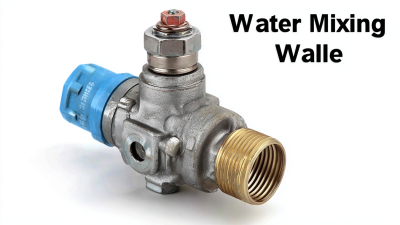
A water mixing valve combines hot and cold water to deliver a controlled outlet temperature. Inside a thermostatic model, a heat-sensitive element responds to temperature changes and adjusts the hot and cold inlets. If hot supply temperature rises, the valve reduces its hot-water flow. Simple in principle. Not foolproof.
A pressure-balancing valve works differently: it responds to pressure changes, such as a toilet flushing, and helps limit sudden temperature swings. It may not control outlet temperature as precisely as a thermostatic valve. The U.S. Department of Energy’s Energy Saver guidance estimates that water heating accounts for about 18% of household energy use, making reliable temperature control relevant to both comfort and energy management. A valve does not, by itself, guarantee lower bills.
For buyers comparing suppliers in China, ask for test records showing outlet-temperature stability at changing inlet conditions. Check the specified flow range, materials, connection size, and maintenance instructions. During installation, measure the mixed-water temperature at the tap; do not rely only on the dial. Mineral deposits can affect moving parts over time. That detail is easy to miss. A well-made valve still needs suitable installation and periodic inspection.
Which Types of Water Mixing Valves Are Made in China?
Chinese-made water mixing valves generally fall into four types: thermostatic, pressure-balancing, manual, and electronic models. Thermostatic valves sense outlet temperature and adjust hot and cold flows, making them useful for showers, basins, and central hot-water systems. Pressure-balancing valves respond to changes in supply pressure, helping reduce sudden temperature swings when another tap opens. Manual models use a handle to set the blend; they are simple, but depend more on user adjustment. Electronic versions use sensors and powered controls for precise, repeatable temperature settings. Small details matter: cartridge materials, flow rate, connection size, and service access affect installation and upkeep.
The U.S. Department of Energy estimates that water heating accounts for about 18% of household energy use. That figure is not specific to mixing valves, but it shows why efficient hot-water control matters. For buyers comparing Chinese suppliers, request test reports for temperature stability, pressure range, and durability, then check whether the model suits the intended plumbing system. A polished specification sheet is helpful, but it cannot replace independent testing.
Tips: Confirm the valve’s temperature range and connection standard before ordering. Ask how cartridges are replaced. This step is easy to miss.
How to Evaluate Chinese Water Mixing Valve Suppliers
Choosing a Chinese water mixing valve supplier takes more than comparing quotations. Grand View Research estimated the global plumbing fixtures market at USD 90.7 billion in 2023, with projected annual growth of 5.6% through 2030. That broad market figure signals competition, not product quality. Ask for valve-specific test records, material specifications, and traceable production batches. Paper is not proof.
Check whether the supplier tests temperature stability, flow, leakage, and pressure under conditions matching your installation. Request the test method, sample size, and results—not just a certificate image. For potable-water applications, verify relevant requirements such as NSF/ANSI/CAN 61; for temperature-actuated mixing valves, ask about applicable ASSE 1017 testing. Requirements vary by market, so confirm with the relevant technical authority. Inspect a production sample: turn the handle, feel for cartridge drag, and check the finish around threaded ports. A polished sample can still hide inconsistent batch control. Ask how rejected units are logged and corrected.
Tips: Request a recent factory audit and a sample inspection report. Compare serial numbers across records. Test before ordering at scale; I would not skip this, even when schedules are tight.
What Quality Standards and Certifications Should Buyers Check?
A practical supplier review starts with the exact valve model, not a broad factory claim. Ask for current quality-management certificates, such as ISO 9001, and verify the issuer, expiry date, and factory address. ISO 9001 describes a management system; it does not certify that a valve is safe for drinking water. For potable-water applications, check the approval required in the destination market. Examples include NSF/ANSI/CAN 61 and NSF/ANSI/CAN 372 in North America, or applicable local approvals elsewhere. Confirm that the certificate covers the precise materials, sizes, and product family being quoted. Paperwork matters.
Then examine test evidence for pressure resistance, leakage, temperature cycling, and stable mixing after repeated operation. Request reports from an accredited laboratory, along with material declarations for seals, coatings, and wetted parts. Ask how production batches are traced and what happens when an inspection fails. A factory audit can show whether calibration records and final checks match the documents. Do not rely on a logo image or an old PDF; check certificate status with the issuer where possible. Requirements differ by market, and one approval rarely covers every installation. A small gap between the certificate scope and delivered model is easy to miss. A small gap matters.
How to Compare Supplier Pricing, Customization, and Support
When comparing water mixing valve suppliers in China, compare the full delivered cost, not just the unit price. Ask each supplier to separate tooling, sample fees, minimum order quantities, packaging, and freight. Request material specifications and pressure, temperature, and leakage test records. A low quote is hard to judge without those details. Ask for evidence.
Customization can mean more than changing a connection size. Confirm whether the supplier can adjust the temperature range, body material, thread standard, or installation layout. Request a dimensioned drawing and a production sample before approving an order. Check that the sample matches the drawing. Small differences matter when a valve must fit an existing pipe run. One limitation: a polished sample does not guarantee every batch will match, so ask how production checks are recorded.
Support deserves a place in the comparison. Ask about spare-part availability, response times, troubleshooting documents, and how defects are handled. The WHO/UNICEF Joint Monitoring Programme reported that 2.2 billion people lacked safely managed drinking water in 2022. That figure is not a valve-market measure, but it highlights why dependable water infrastructure matters. A spreadsheet still misses service quality. Compare written commitments and sample records, then weigh them against the savings.
Comparing Water Mixing Valve Suppliers in China
A practical scorecard for comparing supplier quotations, customization options, and support. The example scores are illustrative only—not verified ratings of actual suppliers. Score each supplier using the same evidence and a 1–5 scale.
Compare like-for-like quotations, confirm customization requirements in writing, and verify certifications, delivery terms, warranty coverage, and after-sales response commitments directly with each supplier.