
A Three Phase Transformer is often chosen where power demand is steady, substantial, and spread across industrial equipment. Think of a factory floor: motors start, pumps run, and production lines draw power throughout the shift. Three-phase systems can deliver that power efficiently, often with less conductor material than a comparable single-phase arrangement. But the transformer is not a magic efficiency switch. Correct sizing, cooling, protection, and maintenance still matter.
The wider grid makes the decision more pressing. The International Energy Agency’s Electricity Grids and Secure Energy Transitions report (2023) says over 80 million kilometres of grids may need to be added or refurbished by 2040 to meet climate and energy goals. IEA Executive Director Fatih Birol has described grids as “the missing link in clean energy transitions.” That is a useful warning: equipment choices depend on the network around them, not just a nameplate rating. For facilities, a three-phase unit can support large motors, balanced loads, and future capacity needs, provided engineers check voltage, load profile, harmonics, and available fault protection. A quiet detail matters: unevenly distributed loads can still create imbalance. No design is perfect. Buyers should compare lifecycle costs and service access, not only purchase price. The following sections explain when a Three Phase Transformer is the practical choice, where it may fall short, and which specifications deserve close review. IEA reports provide useful context, but site measurements and qualified engineering review must guide the final selection.
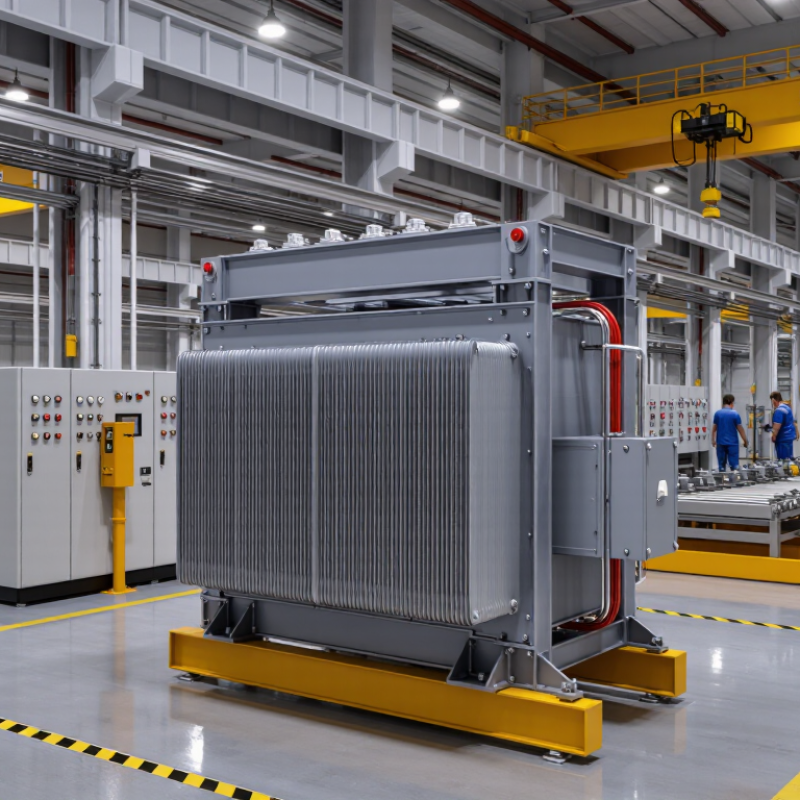
A three-phase transformer transfers electrical energy between circuits through electromagnetic induction. Its primary windings create changing magnetic flux in a shared core, inducing voltage in secondary windings. The three alternating currents reach their peaks 120 electrical degrees apart. That timing produces a steadier power flow than a single-phase supply. The turns ratio sets whether the transformer raises or lowers voltage; winding connections, such as star or delta, affect available voltage and neutral arrangements.
Short version: windings shape voltage.
The ideal diagram looks neat. Real installations require checks. Technicians verify phase sequence, connection points, cooling, and load balance before energizing equipment. Unequal phase loads can increase heating, while harmonics may add stress.
A useful reminder: a wiring diagram is not the installation.
The U.S. Department of Energy’s 2024 distribution-transformer standards analysis estimates 10.3 quadrillion British thermal units in cumulative energy savings over 30 years. That estimate covers regulated distribution transformers broadly, not every three-phase unit.
Still, it shows why core losses and operating efficiency matter. During inspection, record temperatures and loading under normal demand; a transformer that feels warm is not automatically faulty, but unexplained changes deserve attention.
Three-phase transformers serve places where power must move steadily across heavy, connected loads. In factories, they supply motors, pumps, compressors, and production lines; on farms, they support irrigation equipment and grain dryers. Commercial buildings use them for lifts, chillers, and large ventilation systems. Their three-phase supply can deliver substantial power with less conductor material than an equivalent single-phase arrangement. A practical detail matters: transformer selection still depends on load patterns, starting currents, voltage, and site conditions.
The grid connection is just as important. Substations use three-phase units to step voltage up for transmission or down for local distribution, while renewable-energy projects use them to connect generation equipment to the grid. The International Energy Agency’s Electricity 2024 report says global electricity demand grew 2.2% in 2023 and forecasts average growth of 3.4% annually from 2024 to 2026. Its 2023 report Electricity Grids and Secure Energy Transitions estimates that 80 million kilometres of grids need to be added or refurbished by 2040. That scale makes reliable transformer capacity essential. Still, bigger is not always better: oversized units can waste money, and real load data is sometimes incomplete. That deserves a second look.
Common applications include industrial motor systems, commercial HVAC, data centers, large buildings, and utility power distribution.
At 100 A, a nominal 230 V single-phase supply provides 23 kVA, while a nominal 400 V three-phase supply provides about 69.3 kVA. These values use apparent-power formulas (single phase: V × I; three phase: √3 × line-to-line voltage × line current). Actual usable real power depends on power factor and system conditions.
A three-phase transformer can handle substantial loads in one enclosure, often taking less floor or pad space than three separate single-phase units. In a plant, that can leave more room around switchgear and cable trays. Less clutter. Its shared magnetic core and coordinated phases can also reduce material use for a given capacity, though the actual footprint depends on voltage, rating, cooling, and safety clearances.
Efficiency depends on the design and how the transformer is loaded—not simply on having three phases. Balanced loads help avoid unnecessary current in the system, while carefully designed cores and windings limit no-load and copper losses. The U.S. Department of Energy’s 2016 distribution-transformer standards rule estimated 3.63 quadrillion Btu in cumulative energy savings over 30 years across covered transformers. That figure is not a three-phase-only result. It does show why small efficiency gains matter across long operating hours. That matters. Before choosing a compact unit, compare its certified losses at expected loading, not just its nameplate rating. A smaller installation may still need more cooling space, and a poorly balanced load can erode some practical benefits. I would not treat “space-saving” as automatic; site measurements and a realistic load profile make the claim useful.
Why Choose a Three Phase Transformer?
Three-Phase Versus Single-Phase Transformers
A three-phase transformer handles three alternating currents, making it a practical choice for many commercial and industrial systems. It can deliver substantial power through a compact setup. That matters when space is tight. Single-phase transformers use one alternating current and often suit homes, small shops, or individual appliances. Their design can be simpler for modest loads.
For large motors, pumps, and workshop equipment, three-phase power can support smooth, consistent operation. A single-phase system may be easier to install when demand is low and three-phase service is unavailable. The comparison is not always tidy. Purchase price, wiring, maintenance, and future expansion all affect the real cost. A larger transformer is not automatically the better choice.
Tips: List each load and its starting demand before choosing. Ask a qualified electrical professional to check supply, capacity, and protection requirements. Small details matter, and load estimates can be imperfect. That is worth reviewing.
| Comparison Dimension | Three-Phase Transformer | Single-Phase Transformer |
|---|---|---|
| Power supply | Works with a three-phase AC supply, in which the phase voltages are separated by 120 electrical degrees. | Works with a single-phase AC supply, typically using one alternating voltage waveform. |
| Typical applications | Commonly used for industrial plants, commercial buildings, large motors, and distribution systems with substantial three-phase loads. | Commonly used for homes, small businesses, lighting, and other loads supplied by single-phase circuits. |
| Power rating relationship | For a balanced three-phase system, apparent power is commonly calculated as S = √3 × VLL × IL, where VLL is line-to-line voltage and IL is line current. | For a single-phase system, apparent power is commonly calculated as S = V × I, using the circuit voltage and current. |
| Load characteristics | Can supply three-phase loads directly. Loads should be distributed appropriately among phases to limit imbalance. | Supplies single-phase loads. It is not a direct substitute for a three-phase transformer where three-phase power is required. |
| Output connections | May use connections such as delta or wye (star), depending on the system and application. A neutral is available with suitable wye connections. | Typically has one primary winding and one secondary winding, though winding arrangements and taps vary by design. |
| Equipment arrangement | May be built as one three-phase unit or assembled from three single-phase transformers. The choice affects installation, maintenance, and replacement planning. | A single unit serves one single-phase circuit. Multiple units may be used where separate circuits or a three-phase bank are needed. |
| Space and installation | One integrated unit can provide a compact installation for a three-phase load, but actual size and installation needs depend on rating, cooling, enclosure, and site requirements. | Often practical for smaller single-phase loads. Space requirements depend on the number and rating of units installed. |
| Efficiency and cost | Can be an effective choice for three-phase loads, but efficiency and total cost depend on transformer design, rating, losses, installation, and operating conditions. | Can be a cost-effective choice for single-phase loads. Compare total installed and operating costs rather than assuming one type is always cheaper or more efficient. |
| When to choose | Choose when the available supply and connected equipment require three-phase power, or when a substantial three-phase load is being served. | Choose when the supply and connected equipment are single-phase and the required load can be served within the unit’s rating. |
Note: Select transformer type, voltage, rating, connection, and protection in accordance with the load requirements and applicable electrical codes.
Choosing a three-phase transformer starts with the actual load, not just the equipment nameplate. Add the power needs of motors, pumps, and lighting, then allow room for expected growth. Check primary and secondary voltages, frequency, and connection type against the site supply. A mismatch can cause poor performance or prevent safe operation. Small details matter.
Load balance also deserves attention. Uneven phase loading can increase losses and create extra heat, especially in busy facilities. Review the transformer’s kVA rating, impedance, and efficiency alongside the load profile. Consider whether the site has variable-speed drives or other nonlinear loads, since harmonics may affect heating. A neat load estimate can still be wrong; measure real operating conditions where possible. Installation conditions count, too. Dust, humidity, altitude, ventilation, and available floor space influence enclosure and cooling choices.
Tips: Compare expected peak demand with measured demand. Confirm connection details with a qualified electrical professional, and leave practical space for ventilation and maintenance. Don’t choose by price alone. A low initial cost may not reflect operating losses over years.
