
Light Beam Lamps shape how a space looks and functions, from a focused reading corner to a brightly lit warehouse. Their beams differ in width, intensity, and edge definition. The right choice depends on the task, mounting position, room size, and desired atmosphere. A narrow beam can highlight a sculpture, while a broad beam spreads light across a work surface.
Common types include LED spotlights, floodlights, profile lamps, and moving-head beam fixtures. Spotlights create concentrated pools of light. Floodlights cover wider areas, making them useful for yards, stages, or large interiors. Profile lamps produce controlled shapes with sharper edges, while moving-head fixtures add direction and movement for performances and events. The difference is visible. Names can vary between manufacturers, so product labels alone may not tell the whole story.
A practical comparison should look beyond wattage. Check the beam angle, lumen output, color temperature, color rendering, dimming options, and heat management. For outdoor installations, review the fixture’s weather-resistance rating and mounting requirements. For stage or event use, consider control compatibility and how quietly the unit operates. Context matters most. A powerful lamp can still disappoint if its beam is too narrow or its color feels harsh. This guide compares the leading types of Light Beam Lamps, explains their strengths and limits, and offers clear questions to ask before choosing. Some details are easy to overlook; measuring the space and testing a sample can prevent an expensive mismatch.
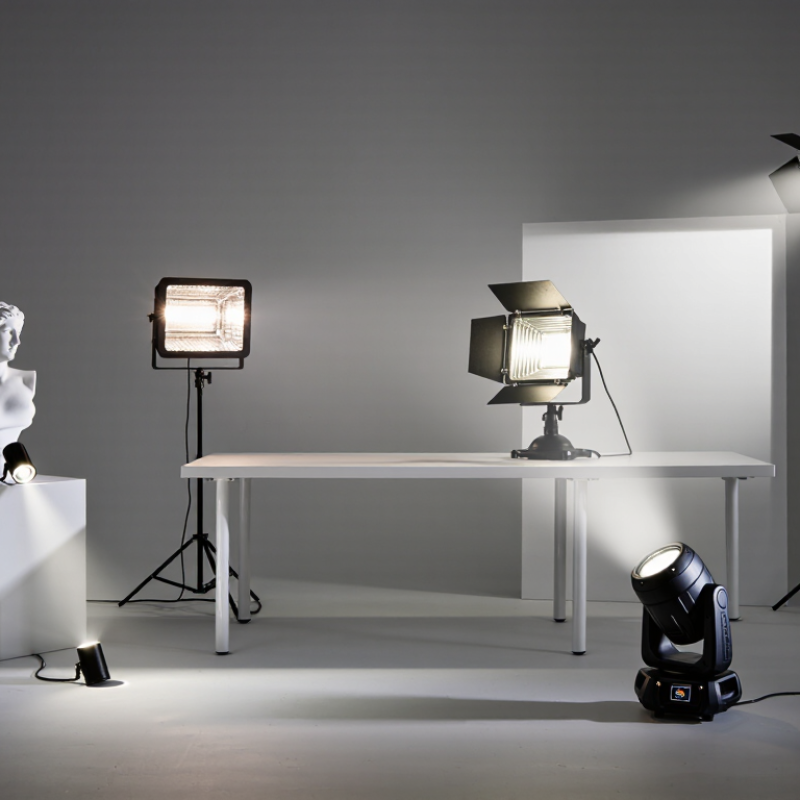
Light beam lamps shape illumination through optics, reflector design, and beam angle. Spot beams concentrate light into a small area, making texture on a stone wall or detail on a workbench stand out. Flood beams spread light more widely, while wall-wash beams use careful placement to brighten broad vertical surfaces with fewer harsh patches. A narrow beam is not automatically brighter everywhere; it puts more light into a smaller area. Check the photometric data, especially beam angle and center-beam intensity, rather than relying on lamp wattage alone.
Distribution matters in real rooms. A spotlight mounted too close to a wall can create a sharp, distracting pool. A wider beam may soften the contrast, but could leave a distant corner dim. The U.S. Department of Energy’s Energy Saver guidance reports that LEDs use at least 75% less energy and last up to 25 times longer than incandescent lighting. That supports efficient source selection, but it does not guarantee good beam control. Layout and aiming still matter. I have seen even a technically efficient setup feel uncomfortable when its beams glare directly into the eyes.
Tips: Before installation, mark the target area and test the beam from normal viewing positions. Use a lighting plan or manufacturer photometric files to compare coverage. Small adjustment, big difference. Keep some flexibility; room finishes can change how light appears.
Spot beam lamps concentrate light into a narrow cone, helping users see distant signs, trail markers, or equipment details. A tighter beam can increase illumination at the center, but it also leaves less light at the edges. The edge matters. On uneven ground, that dark margin may hide a curb or loose stone. Beam angle and center-beam intensity are therefore more useful than wattage alone when comparing lamps. The Illuminating Engineering Society’s LM-79-19 standard describes measurement of solid-state lighting products, including luminous intensity distribution and electrical power. Those measurements help show whether a lamp delivers a focused beam or merely consumes more energy.
A practical check is to test the lamp at the distance you expect to use it. A bright spot on a nearby wall can look impressive, yet feel harsh and narrow outdoors. Look for a stable beam, usable spill light, and controls that work with gloves. There is a trade-off: a highly focused beam may suit long-range viewing but can be tiring for close work. The U.S. Department of Energy’s Energy Saver guidance says LEDs use up to 90% less energy and last up to 25 times longer than incandescent bulbs. Those figures describe the light source, not beam quality, so compare photometric data separately. Real conditions can still disappoint. Rain, dust, and reflective surfaces change what the beam reveals.
Flood beam lamps spread light across a wide area rather than concentrating it into a narrow, distant spot. That makes them useful for close-range tasks such as illuminating a driveway, workshop, campsite, or loading area. A broad beam can reveal obstacles near the edges of your view, where a focused lamp may leave shadows. The trade-off is reach. At greater distances, the light may look less intense because its output covers more ground.
When comparing flood beam lamps, check the beam angle, mounting position, and stated light output together. Numbers alone can be misleading. A lamp aimed too high may cause glare, while a low mounting point can leave nearby objects in shadow. For example, a lamp on a garage wall may cover a parked vehicle and the pavement beside it, but still leave a distant gate dim. Small aiming changes matter. In practical use, broad coverage is often more helpful than maximum brightness for nearby work. Still, I would not assume every wide beam suits every space; uneven surfaces and surrounding walls can change how light spreads.
What Are the Top Types of Light Beam Lamps? - Flood Beam Lamps for Broad, Short-Range Coverage
| Flood Beam Type | Typical Beam Pattern | Coverage Characteristics | Common Applications | Key Consideration |
|---|---|---|---|---|
| Wide Flood | Broad, generally symmetrical spread; often around 60° or wider, depending on the optic. | Illuminates a large area at relatively short distances. Light is spread across the scene rather than concentrated far ahead. | Work areas, campsites, loading zones, and general-purpose outdoor lighting. | Useful for nearby visibility, but its broad spread is less efficient for seeing distant objects. |
| Medium Flood | Moderately wide beam, commonly between a broad flood and a focused spot pattern. | Balances nearby area coverage with some additional reach, making it a versatile general-use pattern. | Utility vehicles, workshops, farm equipment, and outdoor tasks requiring both width and moderate distance. | Beam-angle ranges vary by product; compare the measured pattern rather than relying on the word “medium.” |
| Rectangular or Scene Flood | Wide horizontal spread with a comparatively controlled vertical pattern. | Spreads light across a broad working scene while helping limit unnecessary illumination above or below the target area. | Vehicle-mounted work lights, machinery, trailers, and task lighting near a work surface. | Mounting height and aim affect how evenly the light reaches the intended area. |
| Elliptical Flood | Elongated beam, with a wider spread in one direction than the other. | Provides broad coverage along a selected axis, such as across a roadway, wall, or work zone. | Perimeter lighting, architectural accents, and equipment used beside long or narrow work areas. | Orientation matters: rotating the lamp changes the direction of the beam’s widest spread. |
| Adjustable Flood | Beam width can be altered using an adjustable optic or lens, where the design permits. | Can shift between broader nearby coverage and a more concentrated pattern to suit changing tasks. | Portable task lights, inspection lights, and applications where working distance varies. | Adjustability does not guarantee equal brightness or uniformity at every beam setting. |
| Diffuse Flood | Soft-edged, widely dispersed illumination, often produced by a diffuser or frosted lens. | Reduces harsh shadows and produces comfortable, even light over a nearby area. | Indoor workspaces, maintenance tasks, temporary site lighting, and close-up work. | A diffuser can reduce peak intensity, so it may be less suitable when longer reach is needed. |
Note: Beam-angle values and terms such as “wide” or “medium” are not used identically by all manufacturers. Actual coverage depends on the lamp’s optics, mounting position, output, and the beam-angle measurement method.
Combination-beam lamps pair a focused spot beam with a wider flood beam, helping users see both distant objects and nearby surroundings. On a dark worksite, the spot can reveal a sign or doorway ahead, while the flood lights tools, steps, and edges close by. This mixed pattern is useful when moving between open ground and detailed tasks. It can mean fewer lamp changes. Less fuss.
The balance matters more than a dramatic brightness figure. A narrow spot may leave nearby hazards in shadow; an overly broad flood can feel weak at a distance. Look for a clear beam pattern, stable mounting, and controls that are easy to use with gloves. For vehicle or equipment use, check that the lamp suits its mounting position and power supply. These details affect practical visibility.
Combination lamps are not automatically best for every task. Someone working at a bench may prefer an even flood, while long-range viewing may call for a tighter beam. I still check the beam pattern in person; descriptions can make coverage sound broader than it feels. Try it against a wall, then outdoors, where dust, rain, and reflective surfaces can change what you see. Small setup differences matter.
Approximate beam-angle ranges in degrees. Combination-beam lamps pair a narrow beam for distance with a wider beam for nearby visibility. Actual spread varies by lamp and optics; these ranges are illustrative, not a universal standard.
A combination beam provides both focused long-range illumination and broad near-field coverage in one lamp.
For driving, beam shape matters more than a dramatic brightness claim. Low-beam lamps spread light across the road while limiting glare for oncoming drivers. High-beam lamps throw a narrower, longer reach for dark, open roads; switch them off when traffic approaches. Fog lamps cast a low, wide beam that can help reveal lane edges in mist, but they are not a cure for poor visibility. Correct aiming matters. A powerful lamp pointed too high can make night driving harder for everyone.
Work lamps suit close, practical tasks. Flood beams illuminate a broad area, such as a repair bench or campsite, while spot beams reach farther along a trail or across a work site. For outdoor use, headlamps keep both hands free, and compact lantern-style lamps spread softer light around a tent. Check weather resistance, battery life, mounting stability, and whether the beam can be adjusted. A small detail is easy to miss: the brightest setting may drain a battery before the task is done. More light is not always better.
Tips: Match the beam to the distance and area you need. Test a work lamp before relying on it outdoors, and keep a backup light nearby. I still find beam choice less obvious than brightness labels suggest; compare the actual beam pattern when possible.
