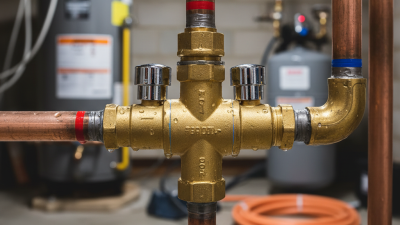
A Thermostatic Control Valve can look like a small brass component, yet its sensing element affects room comfort, water flow, and energy use. The International Energy Agency’s 2023 buildings analysis estimates that buildings account for about 30% of global final energy consumption and 26% of energy-related emissions. That makes reliable temperature control more than a catalog feature.
For buyers comparing China-based manufacturers, specifications deserve close attention. This guide considers temperature range, pressure rating, response stability, materials, certifications, customization, and after-sales support. It also points readers toward practical checks: request test records, compare dimensional drawings, and confirm how each valve performs under changing flow conditions. A polished brochure is not proof of consistent production. No shortlist is perfect.
Hydronic-heating educator Dan Holohan is associated with the practical rule, “Pump away from the point of no pressure change.” It concerns circulator placement, not valve selection alone, but it highlights an important point: control components must work within a correctly designed system. A valve cannot fix poor balancing or unsuitable piping.
The sections ahead examine manufacturers through evidence rather than slogans. Company claims should be checked against sample testing, traceable quality documents, and clear warranty terms. Some product pages leave key details vague. That is worth noting, not glossing over. Use this overview as a starting point, then verify each supplier against your operating conditions and project requirements.
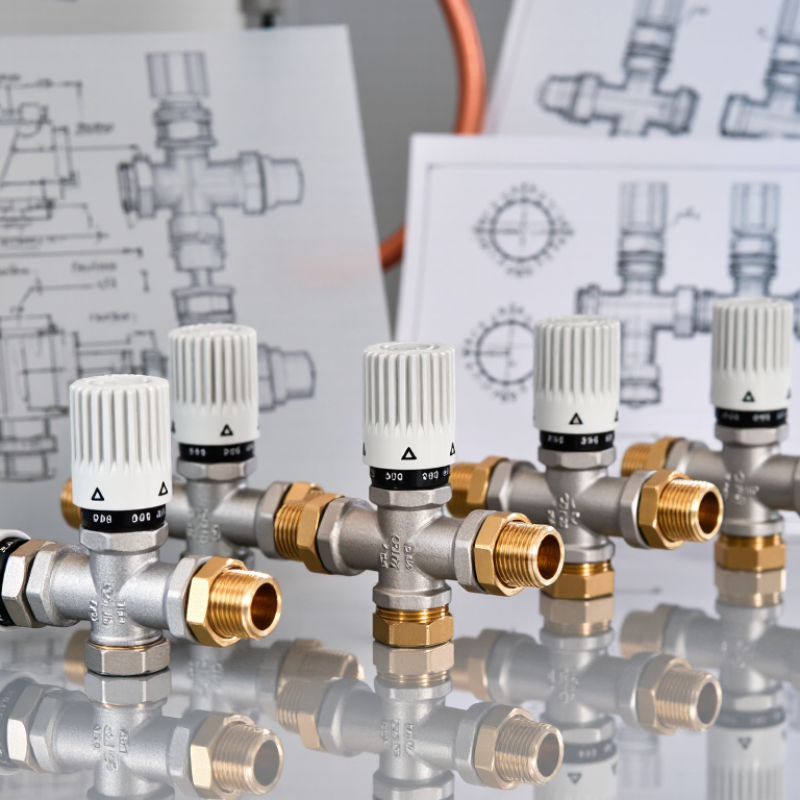
What Is a Thermostatic Control Valve?
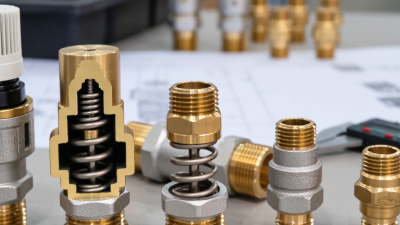
A thermostatic control valve (TCV) regulates fluid flow to help maintain a selected temperature. Inside, a temperature-sensitive element expands or contracts as the surrounding fluid warms or cools. That movement shifts the valve opening, changing how much hot or cold fluid passes through. The response is usually automatic. No separate temperature controller is needed for basic operation.
TCVs are used in heating loops, cooling systems, and equipment that needs steady fluid temperatures. For example, a valve may reduce hot-water flow when a pipe reaches its set point. Actual performance depends on correct sizing, installation, and operating conditions. A valve that is too large can react unevenly. That detail is easy to overlook. The fluid, pressure range, and desired temperature band all matter when selecting one.
Tips: Check the valve’s temperature range and connection size against the system requirements. Install it in the orientation specified by its technical documentation, and allow room to access the sensing element. After startup, measure the temperature near the controlled point. Small differences between the set point and actual reading may signal poor placement, trapped air, or an unsuitable valve.
A thermostatic control valve automatically adjusts fluid flow in response to temperature. Many designs use a temperature-sensitive element to move the valve without an external electrical power supply. The operating range and performance depend on the valve design and application.
| Valve type | How temperature is sensed and controlled | Typical application | Temperature information | Key selection checks |
|---|---|---|---|---|
| Thermostatic radiator valve (TRV) | A built-in sensor responds to room air temperature and moves a pin to regulate hot-water flow through the radiator. | Room-by-room temperature control in hydronic heating systems. | Many models have user settings covering approximately 6–28°C; the scale and control range vary by model. | Connection size, valve orientation, system pressure, flow rate, and compatibility with the radiator system. |
| Thermostatic mixing valve | A temperature-sensitive element adjusts the hot- and cold-water proportions to maintain the mixed-water outlet temperature. | Domestic hot-water distribution and point-of-use temperature control. | Many domestic models are adjustable within ranges that include roughly 35–60°C; exact limits are model-specific. | Required outlet temperature, inlet temperature and pressure balance, flow capacity, and applicable safety requirements. |
| Self-acting process temperature control valve | A sensor, often connected to an actuator by a capillary, responds to process temperature and modulates the heating or cooling medium. | Heat exchangers, tanks, and other processes requiring automatic temperature regulation. | There is no single standard range; the available setpoint range depends on the sensor, actuator, and valve assembly. | Process medium, required setpoint, pressure and temperature ratings, flow coefficient, and fail-safe behavior. |
| Thermostatic steam control valve | A temperature sensor and thermostatic actuator modulate steam flow in response to the temperature being controlled. | Steam-heated equipment and heat exchangers where temperature control is required. | Control range is design-specific and should be checked against the application’s operating temperature. | Steam pressure, condensate handling, valve sizing, sensor location, and the required control response. |
| Thermostatic bypass valve | A temperature-responsive element opens or closes a bypass path as the sensed fluid warms or cools. | Some engine-cooling, lubrication, and fluid-circulation systems. | Opening temperature and travel are specified for the particular system and valve; they are not universal. | Opening temperature, fluid compatibility, flow direction, pressure rating, and the system’s bypass arrangement. |
Temperature figures are indicative examples, not universal specifications. Confirm the operating range and rated conditions in the technical documentation for the exact valve configuration.