
Choosing the right Stainless Steel Hollow Bar in 2026 starts with two practical questions: how is it made, and what will it face in service? Seamless and welded bars differ in production route, available dimensions, and suitability for particular machining or pressure-related applications. Grade matters just as much. Austenitic 304 and 316 are common choices for general corrosion resistance; duplex 2205 offers higher strength in many environments; and precipitation-hardening grades suit parts requiring heat-treated strength. No single type wins everywhere.
Industry scale provides useful context, but not a shortcut to product selection. The World Stainless Association’s Stainless Steel in Figures 2024 reports 58.4 million tonnes of global stainless steel melt-shop production in 2023. That figure describes stainless steel overall, not hollow-bar output. A useful distinction. Buyers should therefore compare actual mill data, certificates, tolerances, and test results rather than infer hollow-bar availability from broad market growth. A polished surface can look reassuring. It does not prove the alloy or internal quality.
This guide examines the leading hollow-bar types expected to matter in 2026, including common austenitic, duplex, and high-strength grades, alongside seamless and welded options. It will connect each type to real considerations: corrosion exposure, machinability, strength, dimensional accuracy, and cost. Supplier terminology can be inconsistent, and that deserves scrutiny. Confirm the grade designation and applicable product specification before ordering, especially when a bar will become a close-tolerance shaft or a fluid-handling component. The best choice is the one supported by evidence and matched to the job—not simply the most expensive grade.
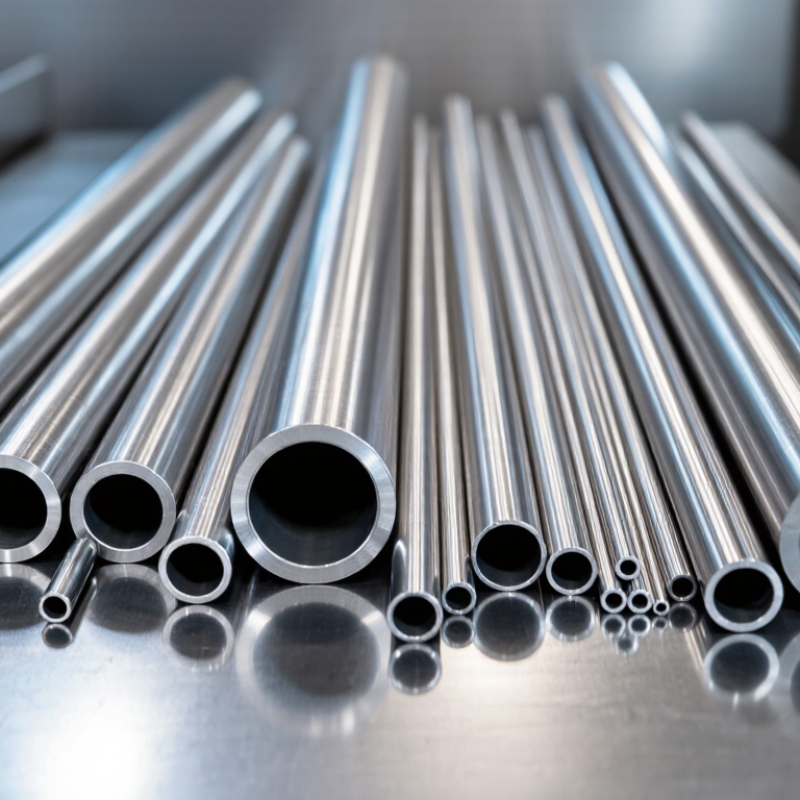
Stainless steel hollow bars are classified by how they are made, their cross-section, and their alloy family. The manufacturing route is a useful starting point. Seamless bars are formed without a welded seam, while welded bars are made from formed strip joined along a seam. Neither type is automatically best; pressure, machining needs, dimensions, and inspection requirements affect the choice. That matters.
Cross-section provides another clear distinction. Round hollow bars are common for turned parts and concentric machining. Square and rectangular profiles can suit frames or components that need flat faces. Wall thickness and outside dimensions should be checked together, since a small change can affect stiffness and the amount of material removed during machining. Labels can vary.
Alloy families further separate one bar from another. Austenitic grades are widely used for corrosion resistance and fabrication; duplex grades combine properties that may suit higher-strength applications. Ferritic and martensitic grades have different forming, strength, and heat-treatment characteristics. Grade names alone do not tell the full story. Check the applicable specification, tolerances, test records, and service environment before ordering. A bar used near salt spray, for example, may need a different grade from one used indoors, though the exact choice depends on exposure and maintenance.
In 2026, 304 and 304L remain widely used austenitic grades for stainless steel hollow bar. They suit general fabrication, food-processing equipment, and indoor or mild outdoor service. Their chromium-nickel composition provides useful corrosion resistance and good formability. 304L has lower carbon content, which can reduce sensitization concerns after welding. A practical detail: check whether the bar will be welded, machined, or left exposed to moisture. The best choice depends on the job.
For chloride exposure, 316 and 316L are common upgrades. Molybdenum improves resistance to pitting and crevice corrosion, making these grades useful near coastal air or in process equipment. They are not immune to salt. Crevices, deposits, and poor cleaning can still cause trouble. More alloy does not fix every design problem.
Grade 303 is selected when machining speed matters, but its sulfur content generally reduces corrosion resistance compared with 304. For elevated-temperature service, 321 may be considered; titanium helps stabilize the material after heating. Grade selection is sometimes oversimplified. Confirm the service environment, product specification, and required properties with a qualified materials professional before ordering.
What Are the Top Stainless Steel Hollow Bar Types in 2026?
How Ferritic and Martensitic Hollow Bars Differ
Ferritic and martensitic grades suit different jobs, even when their hollow bars look alike on a rack. Ferritic grades, such as 430, are magnetic and generally resist stress-corrosion cracking. They cannot be hardened through conventional heat treatment, so they are often selected for moderate-strength parts and certain corrosive environments. A cut end may show a clean, bright surface, but appearance alone cannot confirm grade or performance.
Martensitic grades, including 410 and 420, can be hardened and tempered. That makes them useful for shafts, valve components, and wear-prone parts where strength matters. They are magnetic too, but their corrosion resistance may be lower than that of many ferritic grades. Heat treatment and final hardness affect machining, so a shop may need different cutting speeds or tooling. The distinction is useful, but not absolute; grade and service conditions matter.
Tips: Check the material certificate, required hardness, and actual exposure to moisture or chemicals before ordering. Ask for the specified condition, not just the grade. One detail is easy to miss: a hollow bar’s wall thickness can affect machining and part strength.
| Family | Representative grades | Metallurgical structure | Heat-treatment response | Typical performance profile | Welding and fabrication | Common application areas |
|---|---|---|---|---|---|---|
| Ferritic | Type 409 (UNS S40900); Type 430 (UNS S43000) | Primarily ferritic, body-centered cubic structure; generally magnetic. | Not hardenable by conventional quench-and-temper heat treatment. Annealing may be used to restore ductility after processing. | Generally lower nickel content than common austenitic grades. Corrosion resistance varies by grade and environment; Type 430 is typically more corrosion resistant than Type 409 in many atmospheric settings. | Can be welded, but weld procedure and thickness matter. Grain growth and reduced toughness in the weld heat-affected zone can require attention. | Type 409 is commonly used in automotive exhaust components. Type 430 is used in indoor equipment, appliance components, and architectural trim. |
| Ferritic | Type 439 (UNS S43035); Type 446 (UNS S44600) | Ferritic and magnetic. Type 439 is stabilized; Type 446 is a higher-chromium ferritic grade. | Not hardenable by quenching. Processing and annealing practices are selected for the grade and intended service. | Type 439 is designed to improve resistance to intergranular corrosion after welding compared with unstabilized ferritic grades. Type 446 offers oxidation resistance at elevated temperatures, subject to service conditions. | Stabilized grades such as 439 can be useful where welded fabrication is required; suitable filler metal and procedure selection remain important. | Type 439 is used in exhaust and heat-exchanger components. Type 446 is used in selected high-temperature furnace and heating equipment. |
| Martensitic | Type 410 (UNS S41000); EN 1.4006 | Can form a martensitic structure after suitable heat treatment; magnetic. | Hardenable by austenitizing, quenching, and tempering. Final hardness and strength depend on heat treatment and section size. | Can achieve higher strength and hardness than typical ferritic grades. Corrosion resistance is moderate and depends on surface condition and exposure. | Welding generally needs more care than for ferritic stainless steels; preheating and post-weld heat treatment may be required depending on thickness, restraint, and procedure. | Valve components, pump parts, shafts, and general engineering components where strength and wear resistance are needed. |
| Martensitic | Type 420 (UNS S42000); EN 1.4021 or 1.4028, depending on grade specification | Martensitic stainless steel; magnetic. Higher-carbon variants can reach higher hardness after heat treatment. | Hardenable by quenching and tempering. Properties vary substantially with carbon content and the selected tempering condition. | Offers a hardness and strength range not normally obtained in ferritic grades. Higher hardness does not automatically mean better corrosion resistance. | Welding can be challenging because of hardening and cracking risks; qualified procedures and post-weld treatment may be needed. | Cutlery, wear-resistant parts, pump and valve components, and engineering parts requiring a hardenable stainless grade. |
| Ferritic vs. martensitic | Compare the specific grade and product specification, not just the family name. | Both families are generally magnetic, but their structures and property ranges differ. | Ferritic grades are not hardened by quenching; martensitic grades can be hardened and tempered. | Ferritic grades are often selected for corrosion behavior, thermal performance, or cost considerations. Martensitic grades are often selected when heat-treatable strength or hardness is required. | Weldability is grade- and procedure-dependent. Martensitic grades usually require greater control of welding and heat treatment. | For hollow bars, confirm required dimensions, mechanical properties, corrosion environment, machining needs, and applicable product standard with the supplier. |
Note: Hollow-bar availability, dimensions, delivery condition, and permitted properties vary by grade, standard, and manufacturer. The examples above describe general grade characteristics; they are not interchangeable designations or a substitute for certified material data.
Duplex stainless steel hollow bars suit components exposed to chloride-rich water, washdown chemicals, or coastal air. Grades such as 2205 offer a useful balance of strength and corrosion resistance, while super duplex 2507 is considered for more demanding chloride service. Their higher strength can allow thinner sections in some designs. But thinner is not automatically better; pressure, fatigue, and machining allowances still matter.
The hollow form can reduce material removal when producing shafts, valve parts, and pump components. A machinist can see the benefit in fewer chips and shorter roughing time. Duplex alloys, however, work-harden during cutting, so tooling, feed, and heat control need careful attention. Small process changes matter. A rushed setup can produce poor surfaces or tool wear.
Specialty alloys become relevant when conditions exceed the comfort zone of common stainless grades. Nickel-based alloys may be selected for hot, acidic, or mixed-chemical environments, depending on the exact media and temperature. That choice deserves scrutiny. “Corrosion resistant” is not a complete specification: confirm alloy chemistry, heat treatment, dimensions, and traceable test documentation with the supplier. Real service conditions can be messy, and a laboratory data sheet will not capture every operating detail.
Representative minimum 0.2% proof strength for selected wrought stainless steel grades
Duplex grades stand out for strength: 2205 and super duplex 2507 have substantially higher representative minimum proof strength than austenitic 304 and 316. Values are typical specification minimums for wrought bar, not guarantees for every hollow-bar product; confirm the applicable grade, product form, and standard before selection.
Matching stainless steel hollow bar to an application starts with the part’s shape and working conditions. Round hollow bars suit shafts, sleeves, and components that need concentric machining. Square and rectangular sections can reduce material removal in structural parts. Hexagonal bars may simplify gripping and machining for fittings. Shape helps, but it is not the whole decision.
Check the environment before choosing an alloy. Type 304 often works for indoor equipment and general fabrication. Type 316 is a stronger candidate where salt or cleaning chemicals are present. For higher strength or demanding corrosion conditions, duplex grades may be worth evaluating. Confirm the required strength, temperature range, and corrosion exposure with the material supplier. A grade that looks suitable on paper can still disappoint if the actual process differs.
Tips: Ask for the outside diameter, bore size, straightness, and machining allowance. Compare these with the finished part drawing. Leave enough wall thickness for threading or deep boring. That matters. Do not select a bar by shape alone; I have seen that shortcut create extra machining and wasted stock. Check the certificate and tolerances, too. A small mismatch in the bore can become an expensive problem later.
