
Choosing the right Hose Clamp in 2026 starts with the joint, not the catalog. A clamp that suits a soft silicone hose may not hold a reinforced line securely. Temperature changes, vibration, pressure, hose material, and access for maintenance all affect the choice. Fit matters. So does installation.
This guide compares common types, including worm-drive, spring, T-bolt, constant-tension, ear-style, and wire clamps. Each has a useful place. Worm-drive models adjust easily, while spring clamps can accommodate changes in hose diameter as temperatures shift. T-bolt designs offer strong, even clamping for demanding connections, but they may be unnecessary for lighter-duty jobs. There is no universal winner. A mismatch can still cause leaks, hose damage, or repeated retightening. Small details count: a rounded band edge, the right diameter range, and a clean seating surface can change the result.
A note on attribution: no source article or verifiable expert quotation was provided, so the following is an original illustrative line from a fictional hose-system specialist, not a real-world quotation: “Choose the clamp for the hose, conditions, and service access—not for habit.” The sections ahead use that practical lens to explain how the leading Hose Clamp types differ, what to inspect before installation, and where selection can become less obvious. Some applications need closer review than a simple comparison chart allows. That is worth admitting.
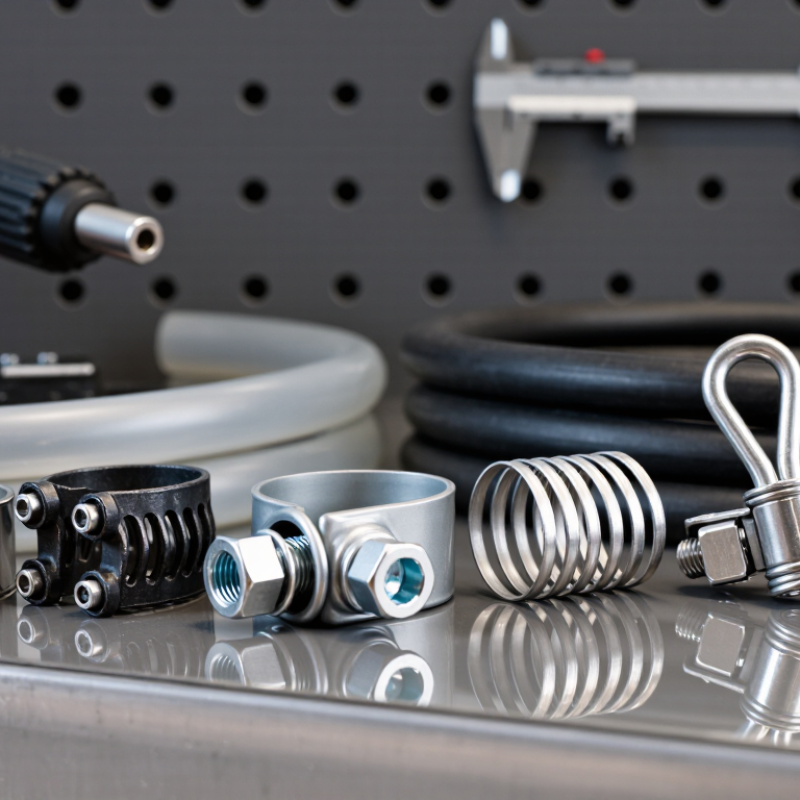
A hose clamp presses the hose evenly against a fitting, helping prevent fluid from escaping under pressure or vibration. The right clamp depends on hose material, fitting shape, operating temperature, and access for maintenance. A worm-drive clamp adjusts with a screw and suits many general-purpose connections. Spring clamps can maintain tension as temperatures shift, while T-bolt clamps provide a broad, firm grip on larger hoses. No type fixes a cracked hose or a poorly matched fitting.
Position the clamp behind the fitting’s raised bead, where it can hold the hose securely without sitting on the edge. Tighten it enough to stop movement and seepage, but not so hard that its band cuts into the hose. A clamp can look secure and still leak if the hose is hardened, the diameter is wrong, or the fitting is scratched. Small details matter. Recheck the connection after the system has run and cooled; the hose may settle slightly.
Tips: Match clamp size to the hose’s outside diameter, not just its stated hose size. Inspect for dampness, residue, or a loose band during routine checks. If tightening leaves a deep groove, stop and reassess the hose and clamp. Over-tightening is an easy mistake, and it can make the seal worse.
Hose clamp performance depends on more than tightening force. The material must withstand moisture, heat, vibration, and whatever the hose carries. Stainless steel resists rust in many wet settings; grades with greater chloride resistance can suit coastal or washdown areas. Yet even stainless steel can corrode under the wrong conditions. Galvanized steel may cost less, but its protective coating can wear or become damaged.
Design shapes how pressure reaches the hose. A worm-drive clamp adjusts across a useful range, making it practical for many general-purpose connections. Look for a smooth inner band when the hose is soft or thin; slots and sharp edges can bite into the rubber. Spring clamps maintain tension as temperatures change and hoses expand or contract. Their range is limited, though. T-bolt clamps spread force across a broad band and suit larger or higher-pressure connections, but excess torque can crush the hose. That detail is easy to miss.
Match the clamp to the hose’s outside diameter and the working conditions, not just the fitting’s appearance. Check that the band sits squarely and does not cover a bend or molded ridge. A clamp that feels tight may still leak if the hose is undersized, aged, or poorly seated. Recheck connections after the first heat cycle or vibration-heavy run. Field conditions can expose a mismatch that a bench test missed.
The leading hose clamp types in 2026 remain worm-drive, spring, constant-tension, T-bolt, and ear clamps. Each suits a different hose and operating condition. Worm-drive clamps adjust easily with a screwdriver, making them useful for serviceable connections. Spring clamps apply continuing pressure as temperatures change. Constant-tension designs do similar work in systems with repeated heating and cooling. Small detail, big difference.
For larger hoses or equipment exposed to vibration, a T-bolt clamp can provide firm, even compression. It needs enough room for its wider band and should be tightened to the equipment maker’s guidance. Ear clamps create a compact, low-profile connection, but removing one usually means replacing it. Check that the clamp material suits the hose and surrounding moisture; stainless steel may resist corrosion, but grades vary.
Match the clamp to the hose’s outside diameter and pressure needs, not just the fitting size. During installation, position it behind the hose bead and avoid overtightening. A crushed hose can leak later, even when the connection looks secure. I admit, choosing by appearance alone is tempting. It is not a reliable shortcut. Recheck connections after the system’s first heat cycle, especially if the hose is new or soft.
Hose clamps differ by how they spread force, handle movement, and maintain grip. A worm-drive clamp adjusts easily with a screwdriver and suits many low- to moderate-pressure connections, such as workshop air lines or household water hoses. Its narrow band can pinch soft hose if overtightened. Fit matters.
For higher pressure or vibration, a T-bolt clamp provides a wider band and stronger, more even compression. It is common on larger hoses and demanding equipment, but the hose and fitting must also be rated for the system. A spring clamp can maintain tension as a hose expands and contracts with temperature, making it useful in some coolant circuits. Ear clamps provide a compact, fairly uniform hold on smaller hoses, though removal usually damages the clamp.
Pressure is not determined by clamp type alone. Hose material, outer diameter, fitting shape, temperature, and installation torque all affect sealing. In practice, this is where a simple chart can mislead: two clamps that look similar may perform differently on a soft silicone hose and a reinforced rubber one. Check the hose assembly’s specifications, use the recommended size, and inspect for leaks after installation. An extra-tight clamp is not always safer.
How do common hose clamp types differ by typical use and pressure suitability?
The ratings are a qualitative comparison of typical applications, not pressure limits. Actual performance depends on clamp design, hose material, diameter, installation, and service conditions. Always check the hose and clamp specifications for the intended pressure and temperature.
Choosing a hose clamp starts with the hose, not the clamp catalog. Measure the hose’s outside diameter over the fitting, then check the clamp’s working range. A clamp that reaches its limit may not tighten evenly. One that is too small can damage the hose. Small detail, big consequence.
For many low- to moderate-pressure connections, a worm-drive clamp is adjustable and easy to inspect. Spring clamps can accommodate changes in hose diameter as temperatures shift. T-bolt clamps distribute force across a wider band and may suit larger or high-vibration connections; verify their pressure rating for the equipment. Ear clamps offer a compact, fixed fit, but need accurate sizing and the right installation tool. There is no universal winner.
Match clamp material to moisture, chemicals, and heat, and consider corrosion where dissimilar metals meet. Follow the hose maker’s guidance and any specified tightening torque. Place the band behind the fitting’s raised edge, not partly over it. Check for leaks after the system reaches operating temperature. It is easy to trust a tidy-looking fit; I would still inspect it again after heat cycling. A visual check alone cannot replace appropriate pressure testing and maintenance.
| Hose Clamp Type | How It Works | Common Applications | Key Advantages | Selection Considerations |
|---|---|---|---|---|
| Worm-Drive Clamp | A screw turns a perforated band to tighten or loosen the clamp. | General-purpose plumbing, automotive hoses, and many low- to moderate-pressure connections. | Adjustable, reusable, and widely available in a range of sizes. | Choose a size that places the hose within the clamp’s stated range. Check that the band and housing suit the environment, and avoid overtightening, which can damage the hose. |
| Smooth-Band Fuel-Injection Clamp | A screw tightens a band with a smooth inner surface and rounded edges. | Fuel-injection and other soft or thin-walled hoses where a conventional perforated band could mark the hose. | Spreads clamping force more evenly and reduces the risk of the band’s slots cutting into the hose. | Use a clamp designed for the hose and service conditions. Confirm fuel compatibility and the manufacturer’s specified size and tightening guidance. |
| T-Bolt Clamp | A bolt and nut draw together a heavy-duty band, typically with a bridge over the bolt area. | Large-diameter or reinforced hoses, including some charge-air, industrial, and heavy-vehicle connections. | Provides a strong, secure clamping arrangement and is available in robust constructions. | Match the clamp’s size, construction, and rated performance to the connection. It may be excessive for small or delicate hoses; do not assume all T-bolt clamps have the same pressure capability. |
| Spring-Band Clamp | A preformed spring-steel band contracts around the hose when installed. | Factory-style automotive and small-appliance hose connections, particularly where space is limited. | Compact and quick to install with suitable pliers; its spring action can accommodate some hose movement. | Use the correct diameter and installation tool. Check corrosion resistance and compatibility with the hose and operating temperature. |
| Constant-Tension Spring Clamp | A spring-loaded design maintains force as the hose expands or contracts. | Cooling-system and other connections subject to temperature changes and hose compression set. | Can help maintain a seal through thermal cycling without routine screw adjustment. | Confirm the clamp is specified for the hose diameter and application. It is not a substitute for a clamp with an appropriate pressure or temperature rating. |
| Ear (Crimp) Clamp | One or more raised ears are compressed with a tool to reduce the band diameter. | Automotive, appliance, and industrial assemblies made for a fixed hose-and-fitting combination. | Low-profile, compact, and tamper-resistant after installation; suitable for repeatable production assembly. | Installation generally requires a dedicated crimping tool, and removal usually destroys the clamp. Select the correct size before crimping. |
| Wire Clamp | Formed wire tightens around a hose, commonly by means of a screw or bolt assembly. | Some large-diameter rubber hoses and specialized or legacy equipment. | Its wire construction can suit certain hose profiles and larger connections. | Check that the wire shape distributes force appropriately for the hose. It is not interchangeable with a band clamp in every application. |
Choosing tip: Start with the hose’s outside diameter on the fitting, then consider hose material, fluid compatibility, operating temperature, pressure, vibration, access, and whether the connection needs to be reused. Follow the hose and clamp manufacturers’ installation instructions.
