China Top Centrifugal Spray Drying Machine Suppliers
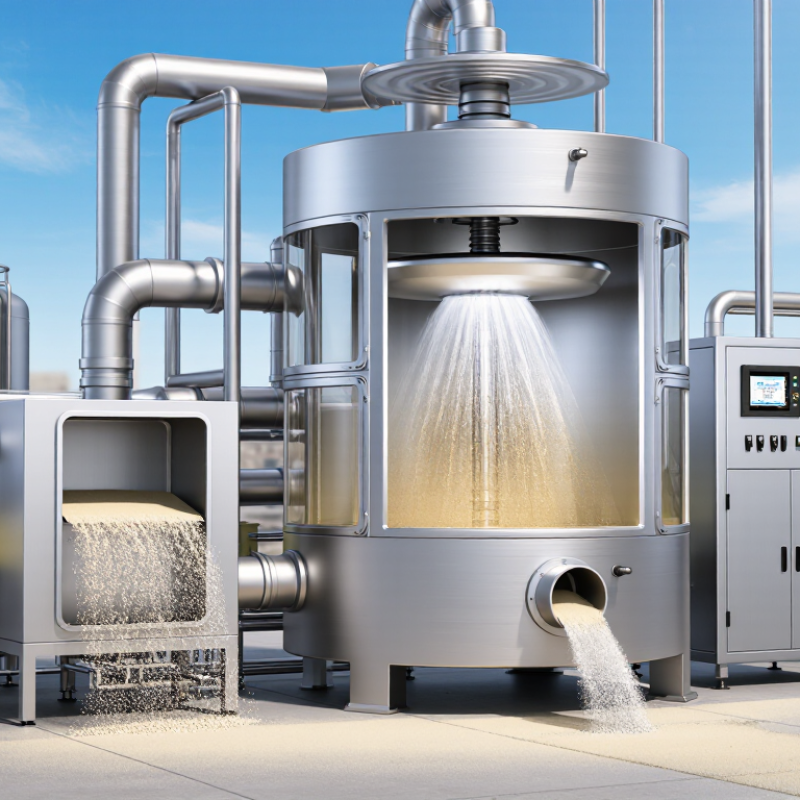
Centrifugal Spray Drying has become a practical technology for producing stable powders from dairy, food, pharmaceutical, chemical, and biotechnology liquids. Its rotating atomizer converts feed into fine droplets, while controlled hot air removes moisture within seconds. The result can be seen in a typical production line: a steady powder stream, separated fines, and a chamber designed for easy cleaning. This process supports adjustable particle size, lower water activity, and improved handling efficiency.
Market evidence explains the growing supplier interest. Grand View Research reports continued expansion in the global spray drying equipment market, driven by demand for powdered foods, functional ingredients, and pharmaceutical formulations. MarketsandMarkets also identifies food, dairy, and pharmaceutical applications as major contributors to spray drying equipment growth. These reports do not evaluate every centrifugal machine equally. That distinction matters. A strong market forecast cannot replace equipment testing.
For buyers comparing China Top Centrifugal Spray Drying Machine Suppliers, technical evidence should guide the shortlist. Review evaporation capacity, atomizer speed, inlet and outlet temperatures, powder recovery, energy consumption, and cleaning access. Suppliers should provide material certificates, process data, factory testing records, and documented after-sales support. Hygienic design and validated controls remain essential for regulated applications, consistent with widely recognized GMP expectations.
The details are important.
Some supplier claims remain difficult to verify without a trial run. Feed viscosity, heat sensitivity, and desired powder moisture can change performance significantly. Therefore, responsible sourcing requires sample testing, transparent specifications, and a realistic review of lifecycle costs—not only the initial quotation.
Centrifugal Spray Drying Machines: Functions, Structure, and Applications
Centrifugal spray drying machines convert liquid feeds into uniform powders through rapid atomization and hot-air drying. An atomizing wheel spins at high speed, breaking the feed into fine droplets. Heated air contacts these droplets inside a drying chamber. Moisture evaporates within seconds. The dried particles then move toward cyclones or bag filters for collection.
That sequence matters.
The main structure includes a feed pump, rotary atomizer, air heater, drying chamber, powder separator, exhaust fan, and control system. Operators adjust wheel speed, inlet temperature, feed rate, and outlet temperature. These settings influence particle size, residual moisture, bulk density, and heat exposure.
MarketsandMarkets reported that the global spray drying equipment market was valued at about USD 5.2 billion in 2023, with continued growth expected through 2028. The figure reflects wider demand for controlled powder production.
Applications cover dairy powders, instant beverages, nutritional ingredients, pharmaceutical excipients, enzymes, ceramics, and specialty chemicals.
Hygienic designs support cleanable processing areas, while closed-loop systems can reduce heat loss and protect sensitive materials. In practice, however, a catalog specification rarely predicts final powder quality. Feed viscosity changes. Ambient humidity changes. Small errors become visible on the chamber wall.
Trial runs, particle testing, and documented operating data remain essential. Centrifugal systems are productive, but they are not perfectly forgiving.
China’s Leading Centrifugal Spray Dryer Supplier Landscape
China’s centrifugal spray dryer supplier landscape has expanded with food, chemical, pharmaceutical, and material-processing demand. Many suppliers offer complete systems, including drying chambers, atomizers, cyclones, bag filters, heaters, and control cabinets. The real difference appears during application testing. A reliable supplier should review feed viscosity, solids content, heat sensitivity, target moisture, and powder size before proposing equipment.
Experienced suppliers usually provide pilot trials or verified process data. Ask for inlet and outlet temperature records, evaporation capacity, powder recovery, and energy consumption. Inspect the atomizer design closely. Disc balance, rotation speed, nozzle-free operation, and cleaning access affect daily performance. A workshop visit can reveal practical details, such as welding quality, cable protection, insulation thickness, and spare-parts organization.
Technical documents should match the delivered machine. This sounds basic, but inconsistencies still occur. Confirm material certificates, instrument ranges, electrical standards, and commissioning responsibilities in writing. After-sales support also matters when powder sticks to the chamber wall or moisture changes with the season. Remote guidance helps, yet local service capacity remains important. No supplier is perfect. Some impressive specifications may reflect ideal test conditions, not factory reality. Buyers should compare witnessed trials, references, maintenance needs, and total operating cost rather than choosing by price alone. Careful evaluation creates a more dependable supplier shortlist.
Key Technical Standards for Comparing Chinese Suppliers
When comparing China’s centrifugal spray drying machine suppliers, technical evidence matters more than catalogue claims. The U.S. Department of Energy’s 2022 Industrial Decarbonization Roadmap places process heat at 51% of onsite manufacturing energy use. Drying deserves close measurement. Ask for tested evaporation capacity, inlet and outlet temperatures, feed solids, moisture targets, and energy consumption. Require a signed test protocol. Capacity claims can vary.
Particle size is another practical benchmark. Request D10, D50, and D90 results from representative feed, not water. Record atomizer speed, disc diameter, residence time, and powder recovery. For hygienic applications, verify product-contact steel grade, weld finish, cleanability, and cleaning validation. ISO 9001 supports quality control, but it does not prove drying performance. The European Commission’s food-processing BAT reference stresses energy efficiency and emission control. Suppliers should provide heat-loss calculations and exhaust-treatment data. Some specifications still omit fan power. That omission deserves challenge.
Tips: Witness a factory acceptance test with your formulation. Check five consecutive runs, not one successful batch. Compare moisture uniformity after storage. Review calibration records and spare-part lead times. Ask whether controls export raw trend data. A short visit may reveal uneven insulation, noisy bearings, or manual cleaning steps. I would also price electricity over five years. Purchase cost alone often misleads. Test the real feed.
How to Evaluate Quality, Customization, and Production Capacity
Evaluating China’s top centrifugal spray drying machine suppliers requires more than comparing prices. According to MarketsandMarkets’ Spray Drying Equipment report, the market is projected to grow from about USD 4.1 billion in 2023 to USD 5.7 billion by 2028. This growth increases supplier competition, but quality still depends on measurable results. Ask for stainless-steel certificates, welding records, surface-finish data, and documented factory testing. A polished brochure is not proof.
Customization should match the product, not the supplier’s standard template. Review centrifugal atomizer speed, inlet temperature, airflow control, chamber geometry, powder recovery, and cleaning access. Request trial data using your actual liquid feed. Check moisture, particle-size distribution, bulk density, yield, and thermal exposure. The International Society of Pharmaceutical Engineers emphasizes process control, equipment qualification, and cleaning validation for regulated production. These principles also improve food and chemical applications.
Production capacity needs careful interpretation. A supplier may advertise feed capacity, while your process depends on evaporation capacity and final powder yield. Require a factory acceptance test under realistic operating conditions. Confirm continuous running time, spare-part availability, operator training, and after-sales response. The European Powder and Granular Materials industry commonly evaluates drying performance through moisture consistency and energy use, not output alone. I would also inspect reference installations personally when possible. One weakness remains: supplier data may reflect ideal laboratory conditions. Independent testing is worth the extra time.
China Top Centrifugal Spray Drying Machine Suppliers: Quality, Customization, and Production Capacity
A practical procurement framework for comparing centrifugal spray drying machine suppliers without using company or brand data. The weighting emphasizes measurable drying performance, product quality, customization capability, and manufacturing readiness.
Recommended evaluation weighting: verify each supplier against application-specific requirements, documented testing results, engineering specifications, and confirmed production schedules before making a purchasing decision.
Purchasing, Installation, and After-Sales Service Considerations
When evaluating China’s top centrifugal spray drying machine suppliers, buyers should begin with process data, not catalog claims.
Ask for evaporation capacity, feed solids, inlet and outlet temperatures, powder moisture, and heat-source limits. Request a process guarantee based on your actual liquid sample. A video test is useful, but it cannot replace laboratory results. Check contact parts, seals, insulation, control components, and cleaning access. Stainless steel grade matters when the feed is corrosive or hygiene-sensitive. Keep spare parts listed in the contract.
Installation deserves equal scrutiny. Confirm foundation dimensions, lifting routes, electrical standards, exhaust treatment, and utility consumption before shipment. Demand certified drawings and a commissioning schedule. During startup, technicians should record atomizer speed, feed rate, air temperature, vibration, and final moisture. These records create a useful baseline. Train operators beside the machine. One missed instruction can cause unstable powder or blocked ducts. Site conditions often differ from factory assumptions. Ceiling height is sometimes underestimated. That mistake is expensive.
After-sales support should include response times, troubleshooting procedures, warranty boundaries, and local service options. Ask how quickly critical seals, bearings, and nozzles can ship. A supplier with documented failure analysis is more credible than one promising permanent support. Review references from similar applications and speak with operators when possible. Do not accept every specification without challenge. Energy use and cleaning labor may change the real cost. Acceptance testing should cover output, moisture variation, energy consumption, noise, and safe shutdown. Real production rarely matches the first spreadsheet.