China Top 10 Silicone Universal Lid Manufacturers?
Choosing the China Top 10 Silicone Universal Lid Manufacturers requires more than comparing prices or factory photos. A dependable supplier should demonstrate stable silicone quality, accurate molding, food-contact documentation, and consistent sealing performance. The best manufacturers also understand different kitchen needs, from small bowls and coffee cups to large frying pans and storage containers.
Materials scientist Dr. Robert M. Laine has emphasized a valuable principle: “Material performance must be judged in the application, not by appearance alone.” This idea matters here. A Silicone Universal Lid may look smooth and flexible, yet fail when exposed to heat, oil, steam, or repeated washing. Small details matter. Rim thickness matters. Odor matters. Fit matters.
This guide evaluates ten Chinese manufacturers through practical purchasing criteria. These include silicone grade, temperature resistance, customization capability, mold precision, production capacity, inspection procedures, packaging, and export experience. We also consider whether suppliers provide useful technical answers instead of vague promises. That distinction is important.
Some companies may appear impressive online but offer limited evidence. That deserves caution. A few manufacturers may also have excellent products but weak catalog presentation. This is where judgment becomes difficult. The ranking should not be treated as an absolute verdict. Buyer requirements differ, and one overlooked detail can change the decision.
The following overview is designed for importers, kitchenware brands, wholesalers, and product developers seeking a reliable Silicone Universal Lid manufacturing partner in China. It focuses on evidence, usability, and long-term cooperation rather than marketing language alone.
What Are Silicone Universal Lids and How Do They Work?
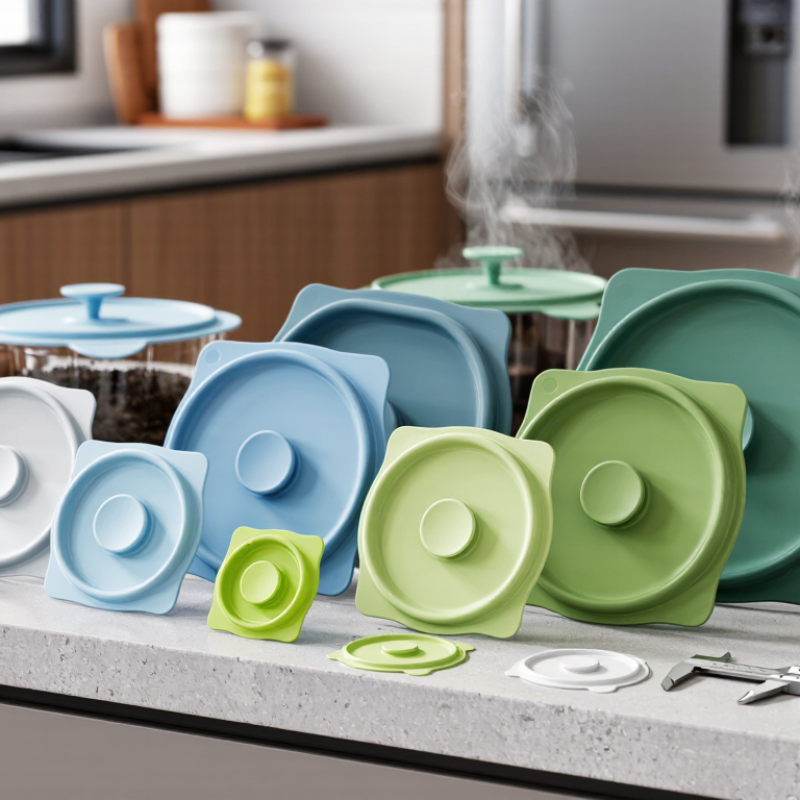
Silicone universal lids are flexible covers designed to fit bowls, cups, cans, and cut produce. Their soft, elastic material stretches over a container rim. This creates tension around the edge and helps limit air, moisture, and odor transfer. Some models include a small pull tab or vent. Others depend only on surface contact and pressure.
The working principle is simple but not magical. A clean, dry rim improves the seal, while oil, crumbs, or uneven edges can cause leakage. In practical kitchen testing, a lid usually performs best on smooth glass or ceramic. It may fit a metal can, but sharp edges can damage the silicone. Temperature tolerance also varies by formulation and thickness. Users should check the manufacturer’s stated range instead of assuming every silicone lid is oven-safe.
Industry data supports growing interest in silicone-based kitchen products. Grand View Research reported that the global silicone market was valued at over USD 18 billion in 2022, with continued growth expected through 2030. Fortune Business Insights also identifies reusable food-storage products as a growing kitchenware segment, driven by convenience and waste reduction. These figures describe wider markets, not universal lids alone. That distinction matters. A lid can reduce disposable wrap use, but it cannot preserve food indefinitely. Regular washing, inspection, and realistic storage times remain essential.
How to Evaluate Chinese Silicone Universal Lid Manufacturers
China Top 10 Silicone Universal Lid Manufacturers?
When evaluating Chinese silicone universal lid manufacturers, start with factory evidence, not online rankings. Request a current business license, production address, and clear photos of molding and inspection areas. A polished website can mislead. Check whether the supplier actually manufactures lids or only trades them.
Ask for silicone grade, temperature range, hardness, and food-contact test reports. The documents should match the exact material and product design. Request samples in several sizes, then test them on glass, stainless steel, and ceramic containers. Check sealing strength, stretching recovery, odor, surface dust, and fit after repeated washing. Small details matter.
Review the supplier’s quality process. A reliable factory should explain incoming material checks, mold maintenance, batch records, and final inspections. Ask how they control flash, uneven edges, and dimensional differences. These defects often appear after mass production. Request a written tolerance standard before placing an order. It may feel excessive, but assumptions create expensive disputes.
Communication also reveals technical competence. Can the team answer questions about silicone shrinkage, packaging pressure, and mold changes? Ask for a sample revision log. A serious manufacturer should record what changed and why. Verify production capacity with recent order evidence, but do not rely only on stated monthly output. Visit the facility or use an independent audit when possible. Remote evaluation saves money, yet it leaves blind spots. I would also compare two or three factories, because the cheapest quotation rarely reflects total quality, inspection, and replacement costs.
China’s Top 10 Silicone Universal Lid Manufacturers
China’s Top 10 Silicone Universal Lid Manufacturers
China’s silicone universal lid sector is expanding with demand for reusable food-storage products. Grand View Research valued the global silicone market at USD 18.31 billion in 2022. It also projects a 7.8% compound annual growth rate from 2023 to 2030. This growth increases pressure on Chinese manufacturers to prove material quality, not only production speed.
A reliable manufacturer should show food-contact test records, batch traceability, and controlled curing conditions. Check whether the lid keeps its shape after repeated heating, cooling, washing, and stretching. Some suppliers claim wide temperature resistance, but testing details can be vague. That needs questioning. The strongest factories usually combine liquid silicone rubber molding with automated visual inspection. They should also provide samples from different production batches. One sample proves little.
A practical review of China’s top 10 silicone universal lid manufacturers should compare tooling accuracy, minimum order quantities, delivery records, and customization ability. Mordor Intelligence identifies food storage as a growing application area for silicone products, supported by reusable-consumption trends. However, market growth does not guarantee consistent quality. Buyers should inspect edge sealing, odor, surface tackiness, and fit across glass, ceramic, and stainless-steel containers. Small defects matter. A lid that loosens overnight is not universal in real use.
What Products and Customization Services Do They Offer?
China’s top silicone universal lid manufacturers usually offer more than one flexible cover. Their product ranges may include stretch lids for bowls, cups, cans, plates, and cut fruit. Some factories also produce suction lids for microwave containers and reusable covers for food storage boxes. Sizes often range from small cup seals to large platter covers.
Customization is a major service. Buyers can request different diameters, thicknesses, shapes, colors, and edge designs. A factory may develop a new mold from a sample, technical drawing, or even a measured container. Logo embossing, debossing, and printed packaging are commonly available. Food-contact silicone grades can be selected according to the target market’s testing requirements, such as migration, odor, and temperature resistance. Documentation matters here. Reliable suppliers should provide batch records, material information, and inspection reports.
Practical testing reveals details that product photos hide. A lid should stretch without tearing, seal smoothly, and release without excessive effort. It should also remain stable after repeated washing and temperature changes. Not every “universal” lid fits every rim. That claim needs careful checking. Color matching can vary between production batches, too. Experienced manufacturers usually offer samples before mass production, though sample development may require extra time and tooling costs. Packaging can also be customized for retail shelves, bulk distribution, or online orders, with barcode labels and protective inserts when needed.
This chart summarizes commonly available product categories and customization services offered by Chinese silicone universal lid manufacturers. Product coverage focuses on reusable food-storage solutions, while customization typically includes colors, branding, packaging, and mold development.
How to Compare Quality, Certifications, Prices, and Delivery Terms
China Top 10 Silicone Universal Lid Manufacturers: Comparing Quality, Certifications, Prices, and Delivery Terms
When comparing China’s top ten silicone universal lid manufacturers, inspect the material before trusting a catalog. Ask for food-contact silicone grades, hardness data, temperature ranges, and migration-test reports. A reliable factory should explain whether lids use platinum-cured or peroxide-cured silicone. Request samples from different production batches. Test sealing performance on glass, steel, and ceramic bowls, including slightly uneven rims. Small gaps matter.
Certifications require verification, not decoration. Review current documents, testing laboratories, and product-model coverage. One certificate may not cover every size or color. Factory audits can reveal molding cleanliness, trimming quality, worker training, and traceability. Prices should include tooling, packaging, inspection, and shipping assumptions. The lowest quotation may hide thin walls, unstable dimensions, or costly rework. In practical sourcing, attractive samples can fail after repeated washing. One inspection is never enough.
Tips: Compare three written quotations using identical specifications. Request a pilot order before full production. Confirm defect limits, replacement terms, carton strength, and delivery milestones. Ask whether delays trigger practical remedies. Leave room for seasonal transport changes. Delivery promises are estimates, not guarantees. Keep every approval sample. Memory becomes unreliable. Recheck odors after heat exposure, too. Some comparisons remain imperfect, but documented evidence reduces unpleasant surprises.