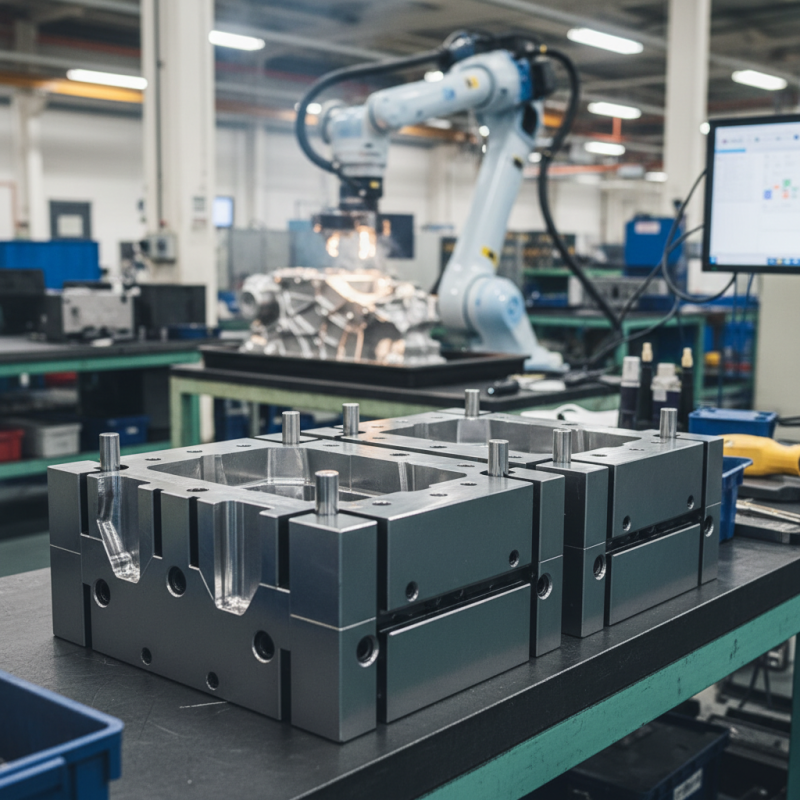
Why Are Die Casting Molds Essential for Manufacturing Success?
Die Casting Molds play a crucial role in manufacturing success. They are the foundation for creating precise and complex metal parts. In industries like automotive and electronics, the demand for quality is high. Effective molds ensure consistency and efficiency, directly impacting productivity.
However, the process of creating Die Casting Molds is not without challenges. Poorly designed molds can lead to defects. This can cause delays and increase costs. Manufacturers must invest time and resources to create optimal molds. It’s a delicate balance between innovation and practicality.
Moreover, the choice of materials for die casting molds significantly influences performance. Inadequate material selection can result in wear and tear. Reflection on current strategies is vital. Identifying these areas for improvement can lead to better outcomes and enhance overall manufacturing processes.
Understanding the Role of Die Casting Molds in Production Efficiency
Die casting molds play a pivotal role in production efficiency. They streamline the manufacturing process by ensuring precision and consistency in every product. Accurately designed molds minimize waste and reduce the likelihood of defects. Each mold can produce thousands of identical components quickly. This speed is crucial for meeting production deadlines and satisfying market demand.
However, the maintenance of these molds often requires careful consideration. Wear and tear can lead to variability in product quality. Skipping regular inspections can result in costly errors. Manufacturers should implement a routine maintenance schedule to extend the life of their molds. This ongoing attention may not seem urgent, but neglecting mold care can hamper overall efficiency.
Using the right materials for die casting molds is equally important. Not all materials withstand the pressures of high temperatures and repeated use. A poor choice can lead to mold failure, disrupting production lines. Companies must invest time in researching and selecting high-quality materials. Balancing budget constraints with quality needs is often challenging, but it is essential for long-term success in manufacturing.
Efficiency of Die Casting Molds in Manufacturing
Types of Die Casting Molds and Their Industry Applications
Die casting molds play a crucial role in various industries. These molds are essential for creating metal parts with precision. There are several types of die casting molds, each tailored for specific applications.
Permanent molds are widely used for high-volume production. They offer durability and longevity. However, they can be expensive to produce. Another type is sand molds, which provide flexibility. They allow for intricate designs, but the finish may not always be flawless. Cold chamber molds are ideal for zinc and aluminum alloys. They are efficient but can lead to longer cycle times.
Industries utilize these molds for diverse needs. Automotive companies rely on them for engine parts. Electronics manufacturers use them for housings. Even the aerospace sector benefits from their precision. Yet, the wrong choice of mold can lead to product defects. Quality control is vital. A small error can cost time and money. Each mold type has advantages and drawbacks, requiring careful consideration.
Why Are Die Casting Molds Essential for Manufacturing Success? - Types of Die Casting Molds and Their Industry Applications
| Mold Type | Material | Typical Applications | Advantages |
| Hot Chamber Molds | Steel, Aluminum | Automotive components, Hardware | High efficiency, Good surface finish |
| Cold Chamber Molds | Steel, Zinc | Heavy machinery, Large castings | High durability, Versatile for various metals |
| Graphite Molds | Graphite | Complex shapes, Speed applications | Excellent thermal conductivity, High precision |
| Injection Molds | Aluminum, Steel | Consumer products, Electrical housings | High production rates, Fine details |
| Permanent Molds | Steel | Small to medium parts, Valves | Reusable, High dimensional accuracy |
Key Factors Affecting the Quality of Die Casting Molds
Die casting molds play a critical role in manufacturing. Their quality directly influences the final product. Several key factors impact the effectiveness of these molds.
Material selection is vital. Molds made from high-grade steel offer durability and longevity. Research shows that high-quality molds can last up to 200,000 cycles. However, not all manufacturers invest in quality materials. This leads to rapid wear and increased production costs. Poor material quality can also result in defects, impacting overall efficiency and profitability.
Precision in design is another factor. Accurate mold designs ensure a good fit and reduce defects. According to industry reports, a 0.1 mm error in mold dimensions can lead to a 5% increase in defective parts. Additionally, cooling system designs are often overlooked. Inefficient cooling can warp molds, damaging their integrity. Manufacturers must regularly assess mold performance and make necessary adjustments. Continuous improvement is essential for success.
Advantages of Using Die Casting Molds in Manufacturing Processes
Die casting molds play a significant role in modern manufacturing. These molds offer precise design and durability for producing high-quality metal parts. According to industry reports, the die casting market is expected to grow substantially, reaching $10.68 billion by 2025, demonstrating its value.
One primary advantage of die casting molds is their efficiency. They allow manufacturers to produce complex shapes quickly, reducing cycle times. For instance, the ability to create multiple parts simultaneously can lower production costs by up to 50%. This efficiency is not just beneficial financially; it also enhances the overall workflow in manufacturing environments.
However, die casting molds do have their challenges. Initial investment costs can be high, and mold maintenance is essential. If not managed properly, even the best molds can lead to defects. This underscores the importance of investing in quality while maintaining an eye on long-term sustainability in manufacturing practices.
Maintenance and Best Practices for Die Casting Molds Management
Proper maintenance of die casting molds is crucial for successful manufacturing. Regular inspection of molds is necessary to identify wear and tear. Small cracks or surface degradation can lead to larger issues. Schedule routine cleaning and lubrication to prevent corrosion and material buildup. Ignoring these tasks can result in costly downtime and production delays.
Best practices for mold management include controlling temperature and pressure during operations. Extreme conditions can create stress and shorten mold lifespan. Implementing a monitoring system helps track performance metrics. Educate the team on mold handling and storage protocols. Improper handling may lead to damage that affects production quality.
Despite these measures, challenges still arise. Some operators overlook minor imperfections, believing they won’t impact outputs. This attitude can lead to errors manifesting in the final product. Continuous training and reflection on techniques used will foster a culture of improvement. Embrace the idea that even small adjustments can lead to significant benefits.