
Choosing a Twin Screw Air Compressor is less about buying the largest machine and more about matching it to real demand. A compressor room tells the story: pressure swings, long periods at partial load, and a receiver tank that may be too small. Small details matter.
The U.S. Department of Energy’s Improving Compressed Air System Performance: A Sourcebook for Industry reports that compressed air can account for about 10% of electricity used in U.S. manufacturing, and substantially more in some plants. That makes energy use a selection issue, not an afterthought. The Compressed Air and Gas Institute’s performance data sheets also help buyers compare tested capacity and power, rather than relying only on headline horsepower. Check free air delivery, operating pressure, duty cycle, air quality needs, service access, and expected maintenance.
Compressed-air specialist Ron Marshall’s published efficiency guidance can be paraphrased this way: “Measure the system’s demand before choosing the compressor.” Treat that as a practical reminder, not a universal sizing formula. A twin-screw unit may suit steady industrial demand, but frequent low-load operation can change the economics. It is easy to overlook.
A careful choice starts with logged pressure and flow data, plus a realistic growth forecast. Ask suppliers to explain their assumptions. Then compare lifecycle cost, not just purchase price. One limitation remains: plant conditions change, and a calculation based on yesterday’s demand may miss tomorrow’s bottleneck. That deserves a second look.
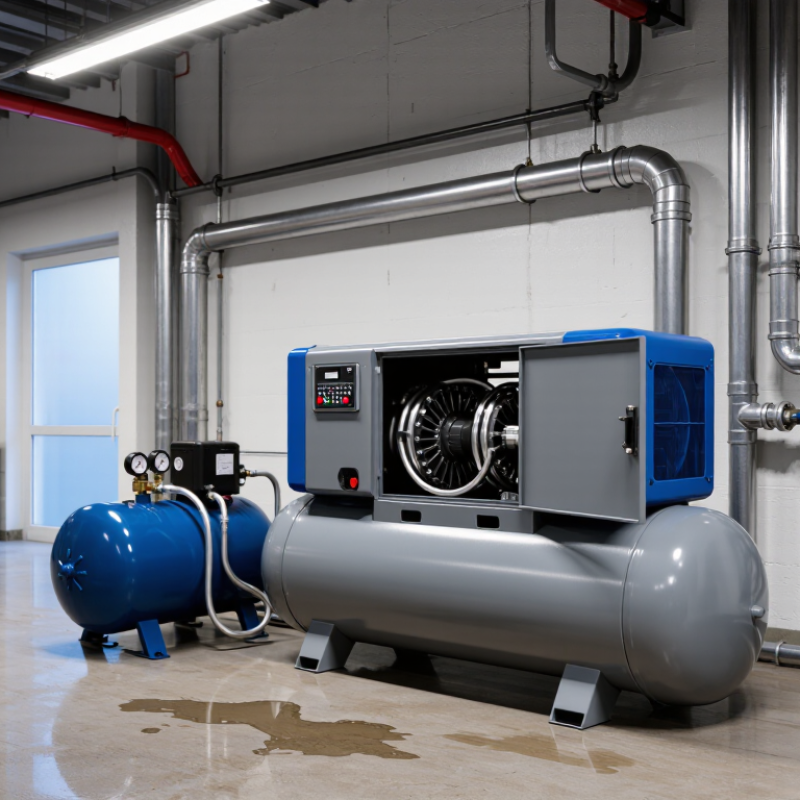
A twin screw air compressor should match the air your facility actually uses, not just its largest machine. List each tool and process, then check its required pressure and airflow. Demand can change sharply between shifts. A spray line may run steadily, while pneumatic tools draw brief, heavy bursts. That difference matters. Record flow and pressure during a normal production cycle, including startup and peak periods. One quiet afternoon is not enough.
Tips: Review compressor logs, equipment specifications, and shift schedules. Check for leaks and note when several machines operate together. I would not rely on nameplate figures alone; actual use can be lower, or surprisingly higher.
Compare measured peak demand with typical demand before choosing capacity. A unit sized only for the peak may spend long periods cycling inefficiently. One sized for average use may struggle during simultaneous demand. Consider a correctly sized receiver to help manage short bursts, and discuss variable-speed control if demand changes often. Also allow for planned production growth, but avoid guessing too generously. Air readings can be messy, and measurements may miss an unusual shift. Recheck them before committing to a compressor size.
Measure pressure at the most demanding machine, not just at the compressor outlet. Record its lowest pressure during a full production shift, including startup and peak demand. Filters, dryers, and long pipe runs create pressure losses, so a comfortable reading near the compressor can still hide a shortfall at a tool.
The U.S. Department of Energy’s Improving Compressed Air System Performance guide notes that raising discharge pressure by 2 psi can increase compressor energy use by about 1%. Extra pressure has a cost.
Next, establish airflow in SCFM or another clearly stated unit. Add the demand of equipment that actually runs at the same time; summing every machine’s nameplate rating can exaggerate demand. A flow logger over several shifts can reveal brief peaks that a daily average misses.
Check that quoted compressor capacity applies at your required discharge pressure. The Compressed Air and Gas Institute’s compressor performance data sheets report capacity and specific power at stated operating conditions, making comparisons more meaningful.
Allow a measured margin for real operating variation, but avoid choosing capacity by guesswork. A modest buffer may help cover future tools or a busy shift; too much can mean inefficient part-load operation. I would recheck the estimate after installation. Production patterns change, and the first airflow calculation is rarely perfect.
In an oil-free twin screw compressor, oil stays outside the compression chamber. Rotors rely on precise clearances, while separate gears and bearings may still need lubrication. That distinction matters. For food packaging, electronics, or instrument air, reducing oil carryover can simplify contamination control. Still, oil-free does not mean contaminant-free: intake filters, piping, and maintenance practices affect delivered air quality. Check the required air-quality specification and verify it at the point of use.
Oil-lubricated twin screw units inject oil into the compression space to seal gaps, remove heat, and protect moving parts. They can suit workshops and general manufacturing when a suitable oil-removal system meets process needs. Expect separator changes, oil replacement, and checks for pressure drop or carryover. Small details add up. A missed separator change can affect air quality and operating costs.
Oil-free models may require specialized service, and their purchase cost is often higher. Size and duty cycle can change the comparison. A lower upfront price may look persuasive, but it can hide filtration and maintenance costs. Compare operating hours, air-quality needs, energy use, and service access. At a site with limited maintenance support, routine service requirements may matter as much as compressor capacity.
A twin screw air compressor should be compared by how efficiently it serves your actual air demand, not just by its rated power. Check specific power, usually expressed as kilowatts per unit of airflow, and compare figures measured under the same conditions. At steady, near-full demand, a fixed-speed model may perform well. Demand often fluctuates, though. That distinction matters.
Control options affect energy use and pressure stability. A variable-speed drive adjusts motor speed as demand changes, which can reduce wasted output during partial-load periods. Its benefit depends on the load profile; frequent operation near full capacity may leave little room for savings. A controller that coordinates multiple compressors can also reduce unnecessary starts and keep pressure within a tighter band. Small details matter.
Review a week of operating data before choosing. Note pressure, airflow, runtime, and periods when production equipment is idle. Then compare expected efficiency across those conditions, rather than relying on a single best-case figure. Ask how the control system handles low demand, pressure fluctuations, and fault alerts. One easy-to-miss point: poor pipe sizing or leaks can erase gains from a more efficient compressor. Estimates also have limits, so treat projected savings as a guide, not a promise.
A twin screw air compressor needs a practical installation plan, not just a clear space on the floor. Measure doorways and service clearances before delivery; a unit that fits the room may still be difficult to repair. Choose a level, stable surface that can support its weight and limit vibration. Access matters. Leave room to remove filters, inspect couplings, and open electrical panels safely.
Heat and airflow deserve equal attention. These compressors release heat while operating, so avoid tight corners and provide ventilation suited to the room’s conditions. Check the electrical supply, piping size, and condensate drainage against the compressor’s specifications. Poorly sized piping can increase pressure losses, even when the compressor itself is correctly selected. I have seen layout drawings miss nearby heat sources; measuring the actual room after other equipment is installed can reveal a different problem.
Plan maintenance before commissioning. Follow the operating manual for oil, air filter, and separator checks, and record service dates and pressure readings. Keep records. Watch for new vibration, rising discharge temperatures, unusual noise, or pressure that takes longer to recover. These changes do not always mean a major fault, but they deserve investigation. Drain condensate as specified, and check for leaks around joints and hoses. Maintenance intervals vary with operating hours, dust, humidity, and load, so a calendar alone may not tell the whole story.
| Evaluation Area | What to Check | Practical Guidance | Before Purchase or Installation |
|---|---|---|---|
| Required air demand | Average and peak flow, expressed in cubic feet per minute (CFM) or litres per second (L/s), at the required pressure. | Base sizing on measured demand and simultaneous equipment use. Avoid selecting a compressor from motor power alone; compare delivered flow at the specified operating pressure. | Record demand during a representative production period and identify future capacity needs. Allow for leaks and planned expansion without routinely oversizing the system. |
| Operating pressure | Minimum pressure needed at the point of use, plus pressure losses through dryers, filters, piping, and fittings. | Every additional pressure increase raises energy use. Set the compressor discharge pressure only high enough to meet the actual system requirement. | Map pressure requirements across the system and check pressure at the most demanding point of use. |
| Room temperature and ventilation | Expected ambient temperature, cooling-air path, and the heat released by the compressor. | Install in a clean, dry, well-ventilated location within the compressor’s stated operating-temperature range. Hot intake air and restricted cooling can reduce performance or cause shutdowns. | Check the installation manual for temperature limits, cooling-air requirements, and any ducting instructions. Provide a route for hot discharge air to leave the room. |
| Service access and clearance | Space to open access panels and reach filters, oil separators, coolers, drains, and electrical components. | Required clearances vary by model and service procedure; there is no single universal clearance dimension. | Use the manufacturer’s layout drawing. Keep maintenance sides accessible and avoid placing equipment where doors, panels, or lifting points are obstructed. |
| Floor, foundation, and handling | Floor load capacity, levelness, vibration, transport route, and lifting access. | Rotary screw packages are generally designed for a level, stable base. Structural and anchoring needs depend on package size and site conditions. | Confirm the package’s operating weight and installation instructions with the building or facilities team. Check doorway, ceiling, and lifting clearances before delivery. |
| Electrical supply | Voltage, phase, frequency, motor rating, starting method, protective devices, and local electrical-code requirements. | Supply requirements differ by compressor model and region. Variable-speed units may also have specific installation and electromagnetic-compatibility requirements. | Have a qualified electrical professional verify the supply, cable sizing, disconnect, grounding, and protection against the unit’s nameplate and manual. |
| Air treatment and condensate | Required compressed-air quality, including moisture, particles, and oil carryover, plus condensate handling. | Choose dryers and filters to match the application. A refrigerated dryer is commonly used for general dry-air needs; lower dew points may require a desiccant dryer. Treatment adds pressure drop and maintenance needs. | Define the required air-quality class or dew point with the process owner. Provide approved condensate collection or treatment; do not discharge oily condensate directly where prohibited. |
| Oil and oil-filter service | Oil type, oil level, filter condition, operating hours, and service history. | Use the specified lubricant and replacement parts. Service intervals depend on the compressor design, operating conditions, and lubricant; contamination or high temperatures may shorten them. | Review the maintenance schedule in the unit manual and set up hour-based service tracking. Check for leaks and abnormal oil consumption during routine inspections. |
| Air filter and intake condition | Intake-filter restriction, dust exposure, and the cleanliness of air entering the compressor. | Inspect more frequently in dusty environments. A clogged intake filter can restrict airflow and increase operating stress. | Plan regular visual checks and replace or clean the filter only as directed by the manufacturer. Keep the intake away from dust, fumes, and hot exhaust air. |
| Separator and downstream filters | Pressure drop across the oil separator and air-treatment filters; oil carryover where relevant. | Rising pressure drop can indicate a loaded element. Replacement limits and intervals are model-specific and should follow the service manual. | Record differential-pressure readings where gauges or sensors are provided. Investigate unexpected oil carryover rather than treating it as a normal condition. |
| Coolers, drains, and condensate | Cooler cleanliness, cooling airflow, drain operation, and visible condensate leaks or blockages. | Dust or scale on heat-transfer surfaces can impair cooling. Condensate drains should be checked so water does not accumulate in the air system. | Include cooler inspection and drain testing in the planned maintenance routine. Isolate and depressurize equipment as directed before cleaning or servicing. |
| Controls, alarms, and energy use | Operating hours, load/unload behavior, pressure settings, alarms, and power consumption. | Frequent unloaded running or excessive cycling may indicate poor sizing, control settings, storage, or air leaks. Variable-speed control can help where demand varies, but suitability depends on the load profile. | Review controller data and investigate recurring alarms. Consider a professional leak survey and compare energy use with delivered air demand. |
Note: Installation clearances, service intervals, oil specifications, and operating limits vary by model. Confirm all final requirements in the selected compressor’s documentation and applicable local codes.
