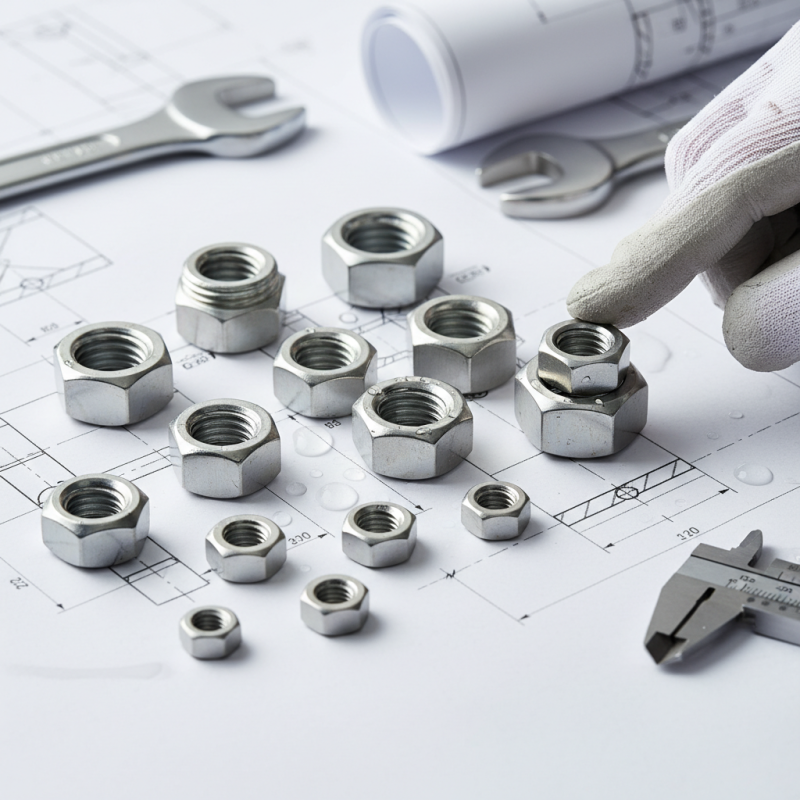
How to Choose Stainless Hex Nuts for Your Project?
Choosing the right Stainless Hex Nuts is crucial for any project. These fasteners play a significant role in ensuring durability and strength. Each project has unique requirements that affect the choice of nuts, which can be complicated.
Understanding the specifications of Stainless Hex Nuts is essential. Different types vary in size, threading, and material grade. Knowing these details helps to match them with your project needs. A small mistake might lead to poor performance or even safety issues.
It is important to consider environmental factors too. Will the nuts be exposed to moisture or chemicals? Such conditions can affect their corrosion resistance. Sometimes, it’s helpful to consult with suppliers or engineers. This can provide insights and avoid errors in selection. Ultimately, reflecting on the specific demands of your project will lead to better choices.
Understanding Stainless Hex Nuts: Types and Grades
Stainless hex nuts come in various types and grades. Choosing the right one for your project is crucial. Understanding the differences can prevent many issues later.
Common types include standard, locking, and flange nuts. Each type serves a unique purpose. For example, locking nuts resist loosening under vibrations. Flange nuts distribute the load over a larger area.
Tips: When selecting nuts, always check the compatibility with bolts. Mismatched sizes can lead to structural failure. It’s essential to consider environmental factors that affect corrosion resistance.
Grades also matter significantly. The most popular grades are 304 and 316. Grade 304 is versatile but offers less corrosion resistance than 316. If your project involves marine environments, opt for grade 316. The extra nickel content enhances performance.
Lastly, consider the finish of the nuts. A rough finish may cause issues during installation. Look for a smooth surface to aid in tightening. Remember, small details matter in big projects.
How to Choose Stainless Hex Nuts for Your Project? - Understanding Stainless Hex Nuts: Types and Grades
| Type | Material Grade | Common Applications | Strength (MPa) | Corrosion Resistance |
| Standard Hex Nut | A2-70 | General fastening applications | 700 | Moderate |
| Heavy Hex Nut | A4-80 | Marine and chemical environments | 800 | High |
| Jam Nut | A2-50 | Vibration-resistant applications | 500 | Moderate |
| Serrated Flange Nut | A4-70 | High-stress applications | 700 | High |
| Lock Nut | A4-60 | Static or dynamic applications | 600 | Moderate |
Identifying Size and Thread Specifications for Your Project
When selecting stainless hex nuts, understanding size and thread specifications is crucial. Start by measuring the diameter of the bolt or screw that the nut will fit onto. Common sizes for hex nuts range from M3 to M30. Identifying the correct size is vital; an incorrect fit may lead to failure in securing your project.
Next, consider the threading. Check whether you need coarse or fine threads. Coarse threads offer faster assembly but may not grip as securely. Fine threads have better tension but can be harder to align. It’s essential to match the nut’s thread pitch with the bolt. Many overlook this detail, leading to mismatched components.
Lastly, material choice plays a role too. While stainless steel is resistant to rust, not all grades offer the same strength. Reflect on the environmental conditions your project will face. If it’s for outdoor use, choose a grade with higher corrosion resistance. Some users may find choosing hex nuts straightforward, but there are subtle intricacies that require attention.
Evaluating Material Properties and Corrosion Resistance
When selecting stainless hex nuts for your project, evaluating their material properties and corrosion resistance is crucial. Stainless steel, specifically grades such as 304 and 316, offers excellent tensile strength and durability. According to the National Association of Corrosion Engineers (NACE), grade 316 provides better corrosion resistance, particularly in saline environments. This makes it suitable for marine applications.
Corrosion resistance relies on the presence of chromium. A minimum of 10.5% chromium enhances this property significantly. However, even stainless steel can corrode under certain conditions, such as exposure to harsh chemicals or extreme temperatures. Therefore, understanding the environment the fasteners will face is key. For example, the Environmental Protection Agency (EPA) reports that environments with high humidity can promote rust formation, even in stainless grades.
It's essential to consider not just the alloy but also the finish of the nuts. Some surfaces may require additional coatings to resist specific corrosive agents. Testing corrosion resistance through salt spray testing can provide valuable data for material selection, ensuring that your project stays reliable under duress. Keep these factors in mind to avoid potential failures that could arise from improper material choice.
Assessing Load Capacity and Mechanical Strength Requirements
When selecting stainless hex nuts, assessing load capacity and mechanical strength is crucial. These elements ensure that the hardware will perform reliably under pressure. The load capacity of a hex nut heavily depends on its material and size. For instance, according to industry standards, a standard stainless steel hex nut made of grade 304 can handle loads up to 40% less than those made from grade 316. This variance can be significant in projects requiring high corrosion resistance.
The mechanical strength of the hex nuts is typically measured in terms of tensile strength. Reports indicate that stainless steel nuts can achieve tensile strengths ranging from 70,000 to 100,000 psi. It's vital to match this strength with the screws or bolts they will support. Many projects overlook this, leading to failures that could be easily avoided. Miscalculating can cost time and money, showcasing the need for careful selection. Also, consider the environment. High heat or exposure to chemicals can alter strength values over time. Hence, it’s essential to evaluate how the nuts will react to their operating conditions.
Using the wrong hex nut can lead to structural failures. A balanced approach that considers load and environment is necessary. Reflect on the longevity and application of your materials. Often, neglecting these details can compromise the success of your project. Each choice has a direct impact on overall safety and functionality.
Choosing the Right Finish and Coating Options for Durability
When selecting stainless hex nuts for your project, the finish and coating options play a crucial role in achieving durability. Properly finished nuts resist corrosion more effectively, enhancing their lifespan significantly. According to industry data, corrosion-resistant finishes can increase the longevity of stainless steel components by up to 50%. This is particularly important in environments exposed to moisture and chemicals.
Opt for passivation for improved corrosion resistance. Passivated hex nuts have a thin oxide layer that protects the metal. This treatment reduces surface contamination and enhances appearance. For more extreme conditions, consider coated options like nylon or zinc plating. These coatings further shield nuts from harsh elements.
Tips: Always check the environmental conditions before choosing a finish. For coastal areas, opt for more robust coatings. Remember, while a higher price tag may seem daunting, investing in quality finishes saves costs in the long run. Keep specifications in mind; not all finishes suit every application. Exploration is key. Evaluate your needs thoroughly before making a choice. Each project dictates different requirements. Take time to study your options carefully.
How to Choose Stainless Hex Nuts for Your Project? - Choosing the Right Finish and Coating Options for Durability