
Choosing a Nickel Alloy Round Bar Manufacturer is a decision about traceability, not just price. The bar may look flawless under warehouse lights, yet its chemistry, heat treatment, or documentation can determine how it performs in a hot, corrosive service environment. The U.S. Geological Survey’s Mineral Commodity Summaries 2025 estimates global nickel mine production reached about 3.7 million metric tons in 2024, with Indonesia supplying roughly 2.2 million. The International Energy Agency also reported continued growth in nickel demand across clean-energy applications. These figures describe a changing supply landscape, but they do not prove that any individual bar meets your requirements.
Details matter. Ask for the alloy designation, heat number, test certificate, dimensional tolerances, and evidence of inspection. Check whether the supplier can connect each bar to its production records. A polished surface is not enough. Neither is a confident sales pitch.
Corrosion engineer Dr. Pierre R. Roberge’s published work emphasizes that material performance depends on its service environment. Applied to supplier selection, that means matching documented material properties to temperature, stress, and exposure—not relying on an alloy name alone. This is a practical interpretation of his work, not a verbatim quotation. It is worth remembering. Even experienced buyers can overlook a small documentation gap when schedules tighten. This guide explains how to assess manufacturers with evidence, technical questions, and a clear view of the risks.
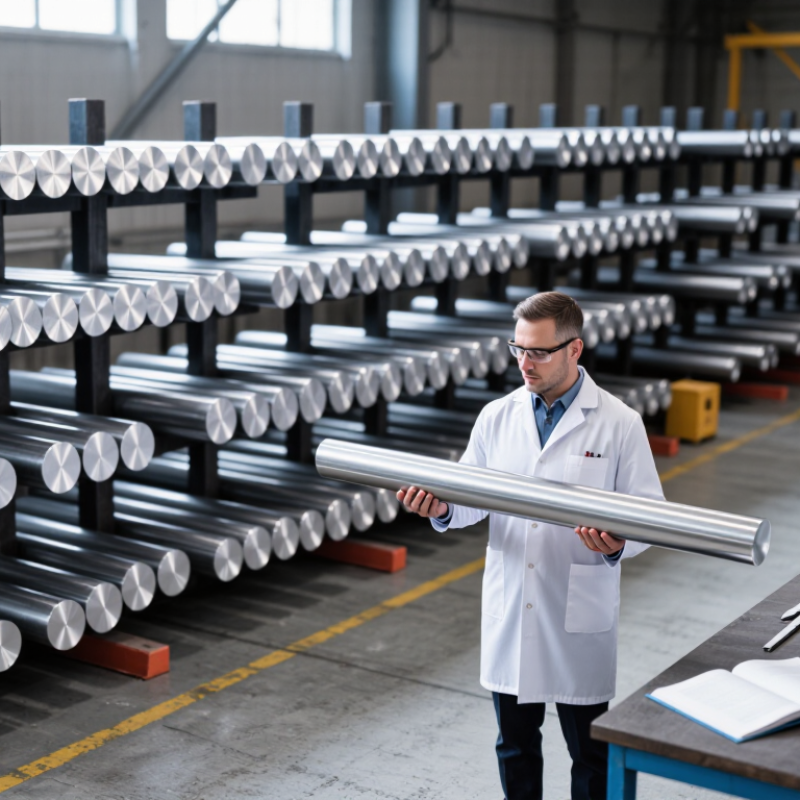
Define the service before comparing nickel alloy round bar manufacturers. Record the operating temperature, pressure, process fluid, and likely contaminants. A shaft exposed to warm chloride water needs different corrosion resistance from a bar used in a dry, high-temperature furnace. Specify the alloy by grade or UNS number, then set diameter, length, tolerance, surface condition, and required heat treatment. For example, ASTM B446 covers bars and rods of UNS N06625. The specification helps prevent grade names from being treated as interchangeable.
Be precise. Request chemical and mechanical test results, heat or lot traceability, and documentation that matches the applicable material standard. Also describe machining, welding, or forming needs; these can affect the condition and properties you should order. The NACE IMPACT study estimated corrosion costs at US$2.5 trillion annually, about 3.4% of global GDP. That figure is a reminder that service conditions matter, not a reason to choose the most expensive alloy automatically. It is easy to over-specify. A long list of requirements can still miss the one that matters, such as a tight diameter tolerance or a minimum test temperature. Ask the manufacturer to confirm each requirement against the intended application.
A capable nickel alloy round bar manufacturer should prove both material identity and process control. Ask for a sample mill test certificate linked to the bar’s heat number. Check chemistry, tensile properties, heat-treatment condition, diameter tolerance, and the specified product standard. Then compare the certificate with your purchase requirements. Paperwork can still be wrong. For critical service, consider independent testing through a qualified laboratory.
Production capability matters just as much. Ask how the supplier melts, forges or rolls, heat-treats, straightens, and inspects each bar size. Request actual inspection records, not only a general quality statement. The USGS Mineral Commodity Summaries 2025 estimates 2024 global nickel mine output at about 3.7 million metric tons, with Indonesia producing roughly 2.2 million. This concentration makes documented sourcing and heat-level traceability worth checking. It does not prove a bar is defective. It does mean buyers should ask where the material came from and how each production lot was controlled. I would also ask about non-destructive testing and dimensional checks; requirements vary by alloy and application. A polished sample looks reassuring, but the records tell more.
When choosing a nickel alloy round bar manufacturer, ask how its quality system controls each step, from incoming billet checks to final marking. ISO’s 2022 Survey reported 1,265,216 valid ISO 9001 certificates worldwide. That figure shows the standard’s reach, not a supplier’s technical competence. Request a current certificate and verify its scope covers the actual production site and relevant processes. A certificate alone is not enough.
Review a sample inspection report before ordering. It should connect the heat number to the bar’s dimensions, chemistry, and mechanical test results. Check whether testing follows the specification required for your grade and application, such as the applicable ASTM or ASME requirements. Ask about tensile testing, hardness checks, and chemical analysis, including laboratory calibration and retest rules. For critical service, clarify whether independent inspection or nondestructive testing is appropriate. Look for clear acceptance limits, not just a “passed” stamp. No system is flawless. A supplier’s response to a missing record can be revealing; I would want a documented correction, not a quick verbal assurance. That detail matters.
When choosing a nickel alloy round bar manufacturer, compare like-for-like quotes. Check that each price covers the same alloy grade, diameter, tolerance, finish, and testing documents. A lower price may exclude inspection records or protective packaging. Ask about setup charges, minimum order quantities, and how long the quote remains valid. Small details can change the final cost.
Tips: Request a written breakdown of material, processing, packaging, and freight costs. Confirm whether quoted lead times begin after order approval or payment. Keep the answer on file; it helps when comparing revised offers.
Lead times depend on stock availability, production schedules, and inspection requirements. Ask whether bars are ready to ship or need mill production. For urgent jobs, check if partial shipments are possible and whether they add freight costs. Delivery options matter, too. Confirm the carrier, estimated transit time, packaging method, and delivery location. A wooden crate may protect long bars better than loose bundling, especially during multiple transfers. Request tracking details and clear procedures for reporting damaged or short shipments. I have seen price comparisons become confusing when delivery assumptions differ, so put those terms in writing.
A reliable nickel alloy round bar manufacturer should prove consistency, not just quote a low price. Match the alloy designation, diameter, tolerance, and delivery condition to your application. Ask for mill test certificates that link each bar’s heat number to its chemical analysis and mechanical test results. Verify critical dimensions and, for demanding service, consider independent testing before placing a large order. Small checks matter.
The USGS Mineral Commodity Summaries 2025 estimates 2024 global nickel mine production at 3.7 million tonnes, with 2.2 million tonnes from Indonesia. This concentration does not make any supplier unreliable, but it makes traceable sourcing and contingency planning worth checking. Ask whether stock is physically available, how mill or source changes are communicated, and what recent on-time delivery performance looks like. Request evidence, not assurances.
Assess practical controls, too. Look for calibrated measuring tools, clear separation of alloy grades, protective packaging, and records linking cut lengths to their original heat numbers. Ask how the manufacturer handles nonconforming material and whether lot-specific test records are available. A polished certificate alone is not enough. Independent audits can add confidence, but they do not replace product testing. Compare the full delivered cost, including inspection, cutting, freight, and the risk of rejected material. A trial order can reveal paperwork gaps or dimensional issues before they affect production.
| Evaluation Dimension | Suggested Weight | What to Verify | Reliable Evidence | Potential Warning Signs |
|---|---|---|---|---|
| Alloy grade and applicable specification | 20% | Confirm the exact alloy designation, product form, condition, dimensions, and governing specification required for the application. For example, ASTM B446 covers nickel-chromium-molybdenum-columbium alloy (UNS N06625) bars and rods. | A quotation and order confirmation that state the alloy, UNS number, specification and revision where applicable, product condition, size, and any agreed tolerances. | Descriptions such as “nickel alloy” without a precise grade, or a proposed substitution that has not been approved by the buyer. |
| Material traceability | 20% | Check whether each bar or bundle can be traced to its production heat and whether identification is maintained through cutting, processing, and shipment. | Material test certificates linked to heat numbers, with matching markings and packing-list details. Specify the required certificate type, such as EN 10204 3.1, in the purchase order if needed. | Unmatched heat numbers, incomplete certificates, or assurances of traceability that cannot be demonstrated on the supplied material. |
| Quality management and inspection | 20% | Review how incoming material, production or processing, final dimensions, identification, and nonconformities are controlled. Verify any claimed quality-system certification and its scope and validity. | Current quality documentation, inspection records, calibration controls, a clear nonconformance process, and an inspection plan agreed before production or dispatch. | Reliance on a quality certificate alone without product-specific inspection records or a defined process for resolving defects. |
| Testing and documentation | 15% | Determine which tests and documents are required for the order, such as chemical analysis, mechanical properties, hardness, dimensions, or additional customer-specified testing. | Test results tied to the supplied heat or lot, with test methods and acceptance requirements identified in the specification or purchase order. | Generic reports that cannot be linked to the shipment, or test claims without clear methods, results, and acceptance criteria. |
| Technical capability and product handling | 10% | Assess the supplier’s ability to meet the requested diameter, length, straightness, surface condition, cutting requirements, and packaging instructions. | A written capability confirmation, documented dimensional checks, and clear agreement on tolerances and surface requirements before order placement. | Unconfirmed tolerances, vague statements about “standard sizes,” or reluctance to clarify processing and inspection responsibilities. |
| Availability and delivery performance | 10% | Confirm whether material is available from stock or must be produced, and establish realistic lead times, shipment quantities, and delivery milestones. | A dated delivery schedule, clear stock or production status, shipment tracking arrangements, and a process for communicating delays. | Unspecified delivery dates, unsupported urgent-delivery promises, or unclear responsibility for partial shipments. |
| Commercial clarity and order controls | 3% | Compare the complete commercial offer, including quantity basis, unit of measure, cutting charges, packaging, freight, payment terms, and quotation validity. | A written quotation with itemized terms and a purchase-order review that confirms all technical and commercial requirements. | Hidden charges, inconsistent units or quantities, or unresolved differences between the quotation and order confirmation. |
| Packaging and shipment protection | 2% | Agree on packaging suitable for the bar dimensions, surface requirements, transport route, and storage conditions. | Packaging details stated in the order, secure load restraint, and shipment markings that preserve identification and traceability. | Packaging that risks damage, corrosion, or loss of material identification during handling and transit. |
Suggested use: Assign each supplier a score from 1 (insufficient evidence) to 5 (strong, verifiable evidence) for each dimension, then apply the suggested weights. Treat the weights as a comparison framework, not an industry standard. Confirm the applicable specification, acceptance criteria, and certificate requirements for each purchase.
