
Choosing the right Ultra High Temperature Servo Motor supplier requires more than comparing torque charts or advertised temperature limits. The decision affects positioning accuracy, maintenance intervals, production uptime, and operator safety. In furnace doors, glass lines, semiconductor equipment, and aerospace test systems, a motor may face radiant heat, vibration, dust, and repeated thermal cycling.
Market reports show why this niche deserves careful evaluation. Fortune Business Insights valued the global servo motors market at approximately USD 9.85 billion in 2023, with continued growth expected through the decade. MarketsandMarkets also identifies industrial automation and robotics as major demand drivers. However, these reports usually combine standard and high-temperature servo products. Their figures do not prove that every supplier can deliver reliable operation above 150°C.
Thermal design matters most.
Dr. Martin Doppelbauer, a widely recognized motor-technology researcher, has emphasized, “Efficiency must always be considered together with the application.” That principle applies strongly here. A supplier should explain its insulation system, magnet retention method, bearing selection, encoder protection, cooling design, and continuous-duty test results. Independent verification against relevant IEC 60034 requirements adds credibility. Factory experience matters too. Ask for test records, not only brochures.
The strongest suppliers provide traceable materials, documented burn-in testing, and application-specific engineering. They should also discuss failure modes honestly. A motor rated for 200°C may still fail early if its cable, feedback device, or grease is unsuitable. That uncomfortable detail is often overlooked. Therefore, this guide examines which China supplier combines genuine high-temperature performance, manufacturing capability, responsive technical support, and dependable long-term evidence.
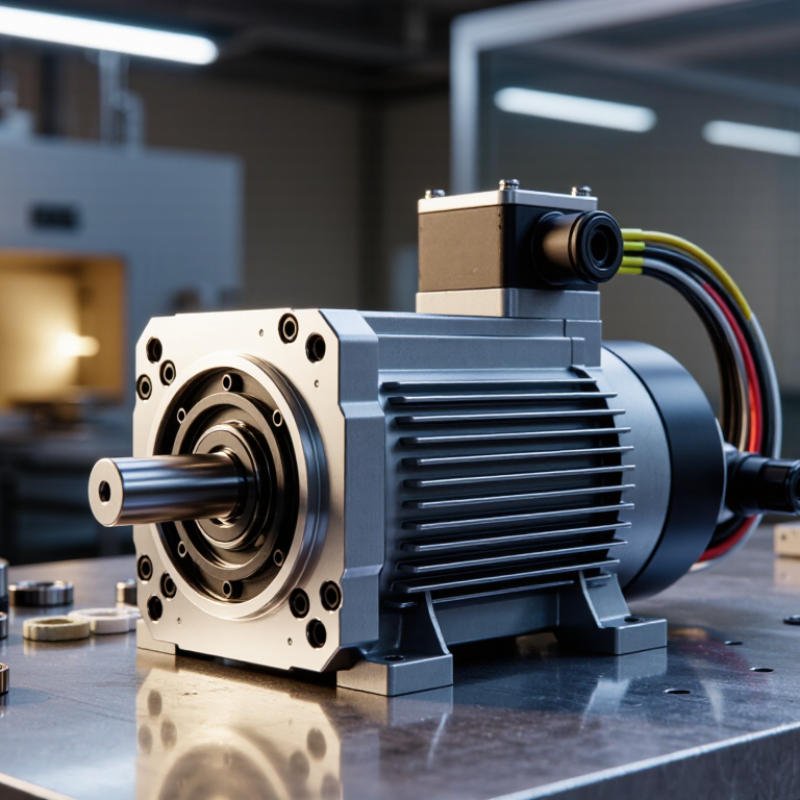
An ultra high temperature servo motor is designed to deliver controlled movement in environments where standard motors quickly lose accuracy. It may operate near furnaces, heat-treatment lines, glass equipment, or specialized robotic systems. Unlike ordinary servo motors, it uses high-temperature insulation, heat-resistant magnets, sealed bearings, and reinforced cable protection. The encoder also needs careful shielding. Heat can distort feedback signals.
Not an ordinary motor. In practical machine testing, engineers check torque stability after prolonged exposure, not only the peak temperature. A motor rated for 180°C may still fail if its connector, grease, or encoder reaches a lower limit. Continuous temperature, heat cycles, vibration, and cooling conditions all affect service life. This detail is often overlooked.
When assessing a leading Chinese supplier, request temperature test records, insulation data, encoder specifications, and traceable quality reports. Ask whether the motor was tested under real load. Laboratory heating without torque can produce misleading results. Proper installation matters too. Ceramic bearings may improve heat resistance, but they can increase cost and require accurate alignment. Water cooling may protect performance, yet it adds plumbing and maintenance risks. There is no universal solution. The best design matches the motor, controller, load profile, and actual thermal environment. Small gaps in testing deserve attention before purchase.
When evaluating China’s leading high-temperature servo motor suppliers, start with evidence, not impressive product language. Ask for tested operating ranges, torque curves, insulation data, and feedback accuracy. Continuous heat matters more than a brief peak-temperature demonstration. Look for thermal cycling records from independent laboratories or controlled factory tests. Small details matter.
A reliable supplier should explain its winding materials, bearing selection, sealing method, and cooling design. Request traceable test reports with dates, equipment models, and measured results. Review the supplier’s experience in robotics, aerospace equipment, semiconductor tools, or other heat-intensive applications. Technical engineers should answer practical questions clearly. Vague replies create expensive risks.
I would also inspect sample motors under your real load profile. Test startup torque, positional repeatability, vibration, and cable performance after prolonged heating. A factory visit can reveal assembly discipline, calibration procedures, and component storage conditions. It is easy to focus on catalog numbers and overlook maintenance support. I made that mistake once.
Ask how failures are analyzed and how replacement parts are handled. A dependable supplier should provide drawings, inspection records, operating guidance, and responsive engineering support. Price deserves attention, but low initial cost may hide weak insulation or unstable feedback. The strongest choice is not always the largest manufacturer. It is the supplier that proves performance consistently, admits limitations, and improves its design when field data exposes a weakness.
Which Chinese supplier offers the best ultra high temperature servo motors? The answer depends on verified performance, not advertising language. China’s strongest candidates should provide thermal test curves, winding insulation data, encoder limits, and continuous-load results. According to IFR’s World Robotics 2024 report, 541,302 industrial robots were installed worldwide in 2023. This demand increases pressure on motion systems used near furnaces, glass lines, semiconductor tools, and high-temperature processing equipment.
Grand View Research identifies industrial automation as a major growth area for servo motor demand. However, ultra high temperature service remains a specialized segment. A capable Chinese supplier should explain its temperature rating clearly. Is it the motor housing, winding, bearing, encoder, or cable? These parts rarely share the same limit. In practical audits, suppliers with documented endurance tests are more reliable than those offering only a maximum temperature number. Some claims still need deeper verification.
Tips: Request a test report based on IEC methods, including overload cycles and thermal aging. Check whether the servo motor maintains position accuracy after prolonged heat exposure. Ask for sample data at your actual speed, torque, ambient temperature, and cooling condition. Also review replacement parts, calibration support, and response time. A supplier may offer an impressive prototype, yet lack stable production control. That weakness matters.
A top Chinese ultra high temperature servo motor supplier stands out through engineering depth, not production volume alone. Its motors must maintain torque beside furnaces, injection units, or vacuum chambers where ambient temperatures exceed 180°C. Ordinary insulation can soften. Precision materials matter.
The strongest manufacturers combine high-temperature windings, heat-resistant magnets, ceramic insulation, and carefully selected bearings. Some use samarium-cobalt magnets because they resist demagnetization better than common alternatives. Thermal simulation helps engineers identify hot spots around the stator and feedback sensor.
An encoder with suitable temperature protection also preserves positioning accuracy. Small errors become expensive.
Testing reveals real capability. Reliable suppliers run continuous-load tests, thermal cycling, vibration checks, and repeated start-stop trials. They record torque loss, temperature rise, insulation resistance, and encoder drift. A clear test report should show limits, not only attractive results. Field experience often exposes weaknesses that laboratory tests miss. A cable may crack near a hot flange. A seal may harden after months. No design is perfect.
Professional manufacturers therefore offer customized cooling paths, reinforced connectors, and derating recommendations for each application. They should explain how performance changes at 200°C, rather than promising unchanged output. Engineers also need traceable materials and consistent quality inspection. China’s strongest servo motor producers understand that reliability is built through repeatable processes, honest data, and the willingness to revise a design after failure.
Who Is China’s Top Ultra High Temperature Servo Motor Supplier?
Choosing a high-temperature servo motor supplier requires more than comparing catalog temperatures. The U.S. Department of Energy reports that motor systems can consume more than half of industrial electricity. Small efficiency losses become expensive in continuous production. That gap matters.
Start with verified thermal data. Ask for continuous torque, peak torque, speed, insulation class, and rated ambient temperature. IEC 60034-1 identifies Class H insulation at 180°C, but this does not mean the motor can operate continuously at 180°C ambient. Winding temperature, bearings, seals, and feedback devices may fail earlier. Request test curves from an accredited laboratory. Also check whether testing used real duty cycles, not short demonstrations.
A reliable supplier should provide traceable materials, process records, and repeatable end-of-line testing. The U.S. DOE’s Premium Motor selection guidance emphasizes efficiency, operating conditions, and lifecycle cost rather than purchase price alone. This applies strongly to servo systems. Ask about encoder stability, cable insulation, lubrication intervals, cooling methods, and repair support. The MarketsandMarkets industrial automation research also shows growing demand for connected and efficient motion systems, yet high-temperature servo data remains poorly standardized. Be cautious with impressive numbers. I would require a sample test under your actual load, temperature, and acceleration profile. Supplier claims can be correct, but sometimes incomplete.
| Evaluation Dimension | Recommended Technical Benchmark | Why It Matters in High-Temperature Applications | Supplier Evidence to Request | Selection Priority |
|---|---|---|---|---|
| Continuous Ambient Temperature | Select a design rated for the actual operating range; common industrial high-temperature classes include 100°C, 120°C, 150°C, or higher. | Temperature rating determines insulation life, bearing reliability, encoder stability, and continuous torque capability. | Temperature-rating certificate, test conditions, derating curve, and continuous-load test report. | Critical |
| Peak Temperature and Exposure Time | Define the maximum temperature and duration, such as short-term exposure above the continuous rating only when supported by test data. | A motor may tolerate a short thermal peak but fail under repeated or extended exposure. | Thermal-cycle results, maximum exposure-time limits, and documented recovery performance. | Critical |
| Torque-Speed Performance | Verify rated torque, peak torque, base speed, maximum speed, and torque derating at the target temperature. | Magnet strength, winding resistance, and heat dissipation change with temperature and can reduce available output. | Torque-speed curves at room temperature and at the specified operating temperature. | Critical |
| Insulation System | Use an insulation system with a thermal class appropriate to the application; Class H is rated to 180°C under applicable motor standards. | The insulation system influences dielectric strength, winding life, partial-discharge resistance, and safety margin. | Insulation-class documentation, hipot results, resistance measurements, and winding-temperature data. | Critical |
| Permanent Magnet Stability | Confirm the magnet material, irreversible demagnetization limit, and operating-temperature margin. | Excessive temperature can permanently reduce magnetic flux and therefore motor torque. | Magnet-temperature test data, demagnetization analysis, and rotor thermal design details. | Critical |
| Feedback Device | Choose an encoder or resolver rated for the actual temperature, vibration, speed, and contamination conditions. | Feedback failure can cause position errors, servo instability, unexpected stops, or machine damage. | Feedback-device temperature range, accuracy, resolution, signal compatibility, and environmental test results. | Critical |
| Cooling Method | Evaluate natural convection, forced-air cooling, water cooling, or remote cooling according to the installation environment. | Effective heat removal is essential because torque capability is strongly linked to winding temperature. | Thermal model, cooling-flow requirements, allowable coolant temperature, and thermal test report. | High |
| Bearings and Lubrication | Verify bearing type, lubricant temperature limit, preload, sealing method, and expected service life. | Lubricant degradation and thermal expansion can increase friction, noise, vibration, and bearing failure risk. | Bearing specification, grease or oil data sheet, life calculation, and high-temperature endurance results. | High |
| Ingress Protection | Specify the required IP rating based on dust, moisture, washdown, oil, and process-contamination exposure. | Ingress protection prevents contamination from damaging windings, bearings, connectors, and feedback components. | IP test certificate, sealing construction, connector rating, and washdown or contamination test data. | High |
| Drive and Control Compatibility | Confirm encoder protocol, motor constants, current limits, commutation method, cable requirements, and tuning support. | A thermally capable motor may still underperform if the servo drive cannot correctly control it. | Motor-drive compatibility list, parameter file, wiring diagram, tuning procedure, and integration test report. | High |
| Mechanical Configuration | Match flange dimensions, shaft geometry, mounting orientation, allowable radial and axial loads, and inertia requirements. | Correct mechanical integration reduces vibration, coupling stress, alignment problems, and installation time. | Dimension drawing, tolerance data, CAD files, shaft-load limits, and balance-grade information. | High |
| Testing and Traceability | Require documented routine testing and serial-level traceability for electrical, thermal, vibration, and performance parameters. | Traceable test records make it easier to verify consistency and investigate field failures. | Factory acceptance-test template, calibration records, serial-number traceability, and nonconformance process. | Medium |
| Certification and Compliance | Request certifications applicable to the destination market and machine installation, including electrical safety and EMC requirements. | Compliance documentation reduces approval delays and supports system-level regulatory conformity. | Valid certificates, declarations of conformity, EMC information, and applicable motor-standard test reports. | High |
| Customization Capability | Assess the ability to customize winding, shaft, flange, feedback, cooling, cable routing, and thermal protection. | High-temperature systems often require application-specific mechanical and thermal integration. | Engineering-change process, prototype procedure, sample approval plan, and customization lead time. | Medium |
| After-Sales Technical Support | Prefer suppliers offering application engineering, commissioning support, failure analysis, spare parts, and repair guidance. | Specialized thermal applications require faster diagnosis and more technical support than standard motor installations. | Support response procedure, service-level commitments, troubleshooting documents, and warranty terms. | Medium |
| Total Cost of Ownership | Compare purchase price together with cooling, commissioning, maintenance, downtime, replacement, energy, and service costs. | The lowest initial price may result in higher operating costs or shorter service life in severe thermal conditions. | Five-year cost model, energy estimate, maintenance schedule, warranty coverage, and expected service-life assumptions. | Medium |
