
What Are the Best Insulated Floor Tile Panels from China?

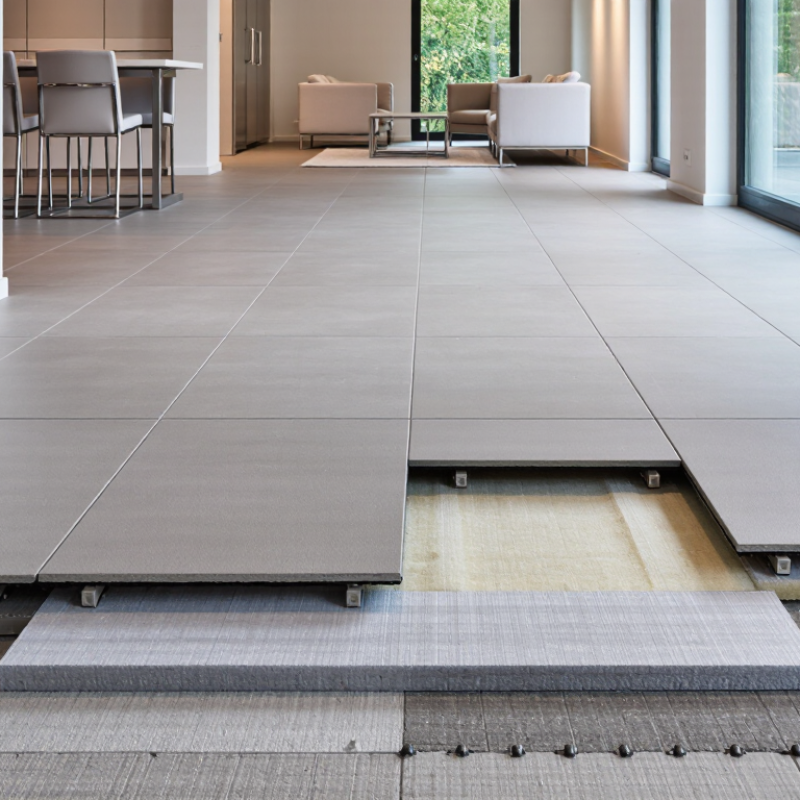
Choosing the best Insulated Floor Tile Panels from China requires more than comparing prices, colors, or catalog photographs. These panels can combine a ceramic or porcelain surface with XPS, PIR, cement-board, or other insulating cores. Their performance depends on the complete assembly, not one attractive specification.

The International Energy Agency reports that buildings consume about 30% of global final energy and produce approximately 26% of energy-related emissions. The 2023 UNEP Global Status Report for Buildings and Construction also identifies buildings as a major source of global energy demand and emissions. These figures explain why floor insulation deserves careful attention. A warmer floor can improve comfort, reduce heat transfer, and support more efficient building operation. However, the improvement depends on installation quality, moisture control, and thermal continuity.

No panel wins every test. A reliable evaluation should examine declared thermal resistance, compressive strength, water absorption, dimensional stability, fire classification, and surface wear. Standards such as ISO 8302, EN 12667, ISO 10545, and China’s GB 8624 can support more consistent comparisons, although certification scope must be checked carefully. ACIMAC’s World Production and Consumption of Ceramic Tiles reports also show China’s important position in global ceramic manufacturing, but manufacturing scale does not automatically guarantee product quality. Factory audits, batch records, laboratory reports, and independent sample testing remain essential. In practice, small details matter: uneven subfloors, damp concrete, weak joints, and poorly sealed edges can reduce real-world performance. This guide compares Chinese suppliers through those practical factors, while acknowledging one uncomfortable truth: published data can still be incomplete.
What Are the Best Insulated Floor Tile Panels from China?

Types of Insulated Floor Tile Panels Made in China

What Are the Best Insulated Floor Tile Panels from China?

Types of Insulated Floor Tile Panels Made in China

Chinese manufacturers commonly produce four insulated floor tile panel types. XPS-core panels resist moisture and compression, making them suitable for basements and cold storage floors. EPS-core panels are lighter and more economical, but their lower density may reduce long-term stability. PIR and PUR panels provide stronger thermal insulation in thinner sections. Rock wool panels offer good fire resistance and acoustic control, although they need careful moisture protection.

The International Energy Agency reports that buildings represent about 30% of global final energy demand. Better floor insulation can reduce heat transfer through concrete slabs. In practical projects, installers check thermal conductivity, compressive strength, water absorption, and dimensional stability. European insulation standards EN 13163 and EN 13165 provide useful testing references for EPS and PUR/PIR products. Tile surfaces should also match the panel’s load rating. A beautiful finish can still fail under forklifts.

Tips: Request third-party test reports, not only factory brochures. Confirm panel thickness with the local climate calculation. Inspect tongue-and-groove joints for gaps. Small gaps matter.

I would not select the cheapest panel automatically. Weak edges, uneven density, or poor adhesive compatibility can create hollow tiles and cold bridges. A responsible supplier should provide batch records, fire-test details, installation guidance, and samples from current production. Some specifications look impressive on paper. Site performance may tell a different story.

What Are the Best Insulated Floor Tile Panels from China? – Types of Insulated Floor Tile Panels Made in China
Panel Type Typical Core and Facing Common Thickness Thermal Conductivity
(W/m·K)
Approx. Thermal Resistance
at 50 mm (m²·K/W)
Typical Compressive Strength Moisture Performance Suitable Tile Installation Best Use Case
XPS Insulated Tile Backer Panel Extruded polystyrene foam with cement-coated fiberglass mesh or reinforced mortar facings 20–80 mm 0.028–0.036 1.39–1.79 250–500 kPa Very low water absorption and good resistance to intermittent damp conditions Thin-set tile, stone veneer, and compatible uncoupling or waterproofing systems Bathrooms, kitchens, balconies, and cold floors requiring a thin, moisture-resistant insulation layer
PIR Insulated Floor Panel Polyisocyanurate rigid foam, normally faced with aluminum foil, kraft laminate, or composite facer 30–120 mm 0.022–0.028 1.79–2.27 120–200 kPa Low water absorption when joints and penetrations are properly sealed Requires a rigid load-distribution layer, cement board, or approved dry-screed board before tiling Projects needing high thermal performance where floor build-up height is limited
PUR Insulated Floor Panel Rigid polyurethane foam with foil, paper, or composite facers 30–100 mm 0.023–0.030 1.67–2.17 100–200 kPa Low moisture permeability with sealed joints; edge protection is recommended Use beneath a structural screed or tile backer board rather than bonding tile directly to the foam Residential floors, insulated slab upgrades, and low-energy building envelopes
EPS Insulated Floor Panel Expanded polystyrene foam, often laminated with cement board, fiber-cement, or reinforced mortar 30–150 mm 0.034–0.041 1.22–1.47 70–250 kPa Moderate moisture resistance; protected installation and sealed edges are important Tile over a cementitious facing, reinforced screed, or approved tile backer board Cost-sensitive insulation, underfloor heating systems, and large-area floor applications
Phenolic Foam Floor Panel Closed-cell phenolic foam with foil or composite facers 25–100 mm 0.018–0.023 2.17–2.78 100–150 kPa Low water vapor permeability; exposed cut edges should be protected Needs a compatible rigid tile substrate or screed to resist point loads and movement High-performance renovation projects requiring maximum insulation in limited space
Mineral Wool Floor Sandwich Panel High-density rock wool core with galvanized steel, calcium-silicate, or cementitious facings 50–150 mm 0.035–0.045 1.11–1.43 Typically 40–100 kPa Non-combustible and vapor-open; must be protected from prolonged liquid water exposure Requires a load-bearing cement board, screed, or structural topping before tile installation Fire-sensitive buildings, plant rooms, corridors, and projects prioritizing acoustic absorption
Cement-Faced Composite Insulated Tile Panel Rigid foam core, usually XPS, EPS, PIR, or PUR, laminated with cement board or reinforced mortar 20–100 mm 0.022–0.041 1.22–2.27 200–600 kPa, depending on the core and facing Good surface moisture resistance when joints, corners, and penetrations are waterproofed Designed for direct application of tile adhesive when the facing is approved for that purpose Wet rooms, shower surrounds, kitchens, and fast-installation tile renovation systems
Technical note: The values shown are typical ranges for commercially available insulated panel constructions manufactured in China. Actual performance depends on density, facing material, board thickness, production standard, test method, and installation quality. Thermal resistance is estimated from 0.05 m divided by the listed thermal conductivity and excludes thermal bridges, facers, joints, and surface resistances. Always verify the product’s test reports, fire classification, dimensional stability, moisture rating, and allowable floor load before specification.

Key Materials and Insulation Technologies

What Are the Best Insulated Floor Tile Panels from China?

The best insulated floor tile panels begin with the right core material. XPS offers low water absorption and strong compressive performance, making it suitable for bathrooms and ground floors. EPS costs less and remains lightweight, but its open structure needs careful moisture protection. PIR provides excellent thermal resistance in thin panels, although it usually costs more and needs accurate cutting.

Mineral wool improves fire resistance and sound control, but it can absorb moisture if the facing fails. Calcium silicate boards offer dimensional stability and work well beneath tile systems. In practical inspections, I check thermal conductivity, compressive strength, water absorption, and thickness tolerance. A panel may look solid while its edges crumble during cutting.

Surface technology matters as much as the core. Cement-coated facings improve tile adhesion and resist deformation under foot traffic. Fiberglass mesh can reinforce the surface, especially around joints and corners. Tongue-and-groove edges reduce thermal bridging, but poor fitting can leave cold lines across the floor. For radiant heating, the panel must tolerate repeated temperature changes without warping. I also examine vapor barriers, adhesive compatibility, and curing conditions. Small installation errors matter. A useful specification should include test data, not only attractive insulation claims. Some suppliers provide excellent laboratory results, yet site performance can decline when storage, moisture, or leveling is ignored. That gap deserves honest attention.

How to Evaluate Panel Quality and Performance

When sourcing insulated floor tile panels from China, evaluate the complete assembly, not just the insulation core. The IEA’s 2023 Global Status Report for Buildings and Construction states that buildings use about 30% of global final energy. It also links buildings to approximately 26% of energy-related emissions. This makes verified thermal performance important, but low conductivity alone is not enough. A strong panel should retain its shape under load, resist moisture, and support reliable tile adhesion.

Request independent laboratory results for thermal conductivity and thermal resistance under stated temperatures. EN 12667 or ASTM C518 can help compare test methods. Check compressive strength under EN 826, water absorption under EN 12087, and dimensional stability under EN 1603. Ask whether results represent the finished panel, including facings and tile layers. A low conductivity number can mislead when joints create thermal bridges. Fire classification, tested under EN 13501-1 or an equivalent national standard, also deserves attention. Real floors face impact, temperature changes, cleaning water, and uneven subfloors. Laboratory perfection may not survive careless installation.

Tips: Ask for recent third-party reports, batch traceability, and production samples. Measure panel thickness at several points. Inspect corners for crushing and check tile alignment after curing. Confirm adhesive compatibility with the panel surface. Do not accept vague phrases such as “high insulation.” Require declared values, test conditions, tolerances, and warranty limits. I would also compare a small trial area before ordering widely. It costs more time, but exposes weaknesses early.

Installation Process and Compatibility Considerations

What Are the Best Insulated Floor Tile Panels from China?

Installation quality often matters more than the panel’s advertised insulation value. Before ordering, request technical data for thermal resistance, compressive strength, moisture tolerance, and dimensional stability. A reliable supplier should provide test reports, installation drawings, and clear tolerance information. Product samples also reveal surface texture, edge accuracy, and core consistency better than photographs.

The subfloor must be clean, dry, level, and structurally sound. Uneven concrete can create pressure points beneath rigid panels. Installers usually check moisture with a calibrated meter before applying adhesive or a dry-lay system. Allow panels to acclimatize indoors, especially after long international shipping. Leave movement gaps around walls, columns, and door frames. Follow the specified adhesive type and curing time, rather than relying on a general-purpose product.

Compatibility requires careful checking. Confirm that the panels match the tile format, floor height, underfloor heating system, and expected traffic load. Some insulation cores may soften under concentrated loads from furniture legs. Others may reduce heat transfer from radiant heating. Ask for verified temperature limits and load testing. Cutting around drains and thresholds can also weaken support if reinforcement is ignored.

It is not foolproof. A rushed installation can cancel good material performance, and even experienced teams should review the instructions for each production batch.

How to Choose the Best Chinese Supplier

What Are the Best Insulated Floor Tile Panels from China?

Choosing the best Chinese supplier starts with measurable performance, not attractive catalog photos. According to UNEP’s 2023 Global Status Report, buildings create about 37% of global energy and process-related emissions. Better floor insulation can support lower heating and cooling demand. However, panel quality depends on the complete floor system, not insulation alone.

Ask suppliers for thermal conductivity, compressive strength, water absorption, dimensional tolerance, and fire-test results. Request reports from accredited independent laboratories. Test a physical sample before placing a large order. Check whether the sample includes tile, core, adhesive layer, and backing. A perfect core can still fail when moisture enters the joints.

Factory verification matters. Review production records, batch traceability, quality-control procedures, and packaging tests. Confirm the supplier can meet your destination’s building codes and labeling rules. The International Energy Agency’s Energy Efficiency 2023 report identifies buildings as responsible for roughly 30% of global final energy demand. Small performance differences may therefore matter over years of use.

Do not trust price alone. A cheaper panel may use thinner insulation or inconsistent bonding. That mistake becomes expensive after installation. Ask for a pilot order and inspect the panels after transport. I would also compare the supplier’s answers twice; unclear technical language is a warning sign. No supplier is flawless, and a polished audit can miss real production pressure. Reliable sourcing requires evidence, repeat testing, and honest discussion of limitations.